Two-Zone Grilling: How to Set Up Direct and Indirect Heat

Smoking-Meat.com is supported by its readers. We may earn an affiliate commission at no extra cost to you if you buy through a link on this page.
One of the most useful things you can do when cooking on a grill is leave yourself an area without burning charcoal or a lit burner directly underneath it.
If my recipes and barbecue guides have helped you over the years, becoming a member is one of the best ways to support my family's business. As a thank you, you'll enjoy every recipe and article completely ad free for less than $2 a month.
Ad free • Instant access • Cancel anytime
That gives you somewhere to finish a thick steak after searing, move chicken that’s getting too dark or cook a roast without exposing the bottom to direct heat for the entire cooking time.
This is called two-zone grilling, and the setup is straightforward: create a direct-heat area over the fire and an indirect-heat area beside it, then use whichever area the food needs as it cooks.
You can do this on a charcoal grill or a gas grill with independently controlled burners, and it gives you considerably more control than spreading the fire underneath the entire cooking grate.
What Is Two-Zone Grilling?
Two-zone grilling divides the cooking surface according to the location of the heat source.
Food directly above burning charcoal or a lit burner receives direct heat, which is useful for browning, searing and cooking foods that don’t need much time on the grill.
Food beside the charcoal or above an unlit burner cooks indirectly when the lid is closed, with hot air circulating inside the grill.
You’ll sometimes hear the indirect area called the cool side, but that can be misleading. It’s still hot enough to cook food, and moving something there doesn’t stop the cooking process. It simply moves the food away from the strongest direct heat.
That’s what makes this arrangement useful when the outside of the meat is getting done faster than the center.
When Should You Use Two-Zone Cooking?
Two-zone cooking is especially useful for thicker cuts that need time to cook through after the outside has browned.
A thick pork chop, for instance, can develop good color over the charcoal before the center is ready. Moving it to indirect heat lets you continue cooking without keeping the surface directly over the fire.
Bone-in chicken benefits from the same flexibility, particularly when dripping fat causes flare-ups or a sauce begins darkening before the meat is done.
You can also keep a whole chicken, pork loin or meatloaf over indirect heat for the entire cook, using the closed grill much like an outdoor oven.
Even when you’re grilling burgers or another quick-cooking food, leaving an indirect area gives you somewhere to move pieces that are cooking faster than the others.
How to Set Up Two-Zone Heat on a Charcoal Grill
Light the Charcoal
Start with enough charcoal for the cooking temperature and time you need, following your grill’s instructions for the fuel type and quantity.
For a shorter grilling session, a chimney starter is a convenient way to light the charcoal without lighter fluid. Let the starting batch become well lit before transferring it, and wear heat-resistant gloves when handling the chimney.
My Charcoal Chimney Starter Guide explains that process.
Arrange the Charcoal on One Side
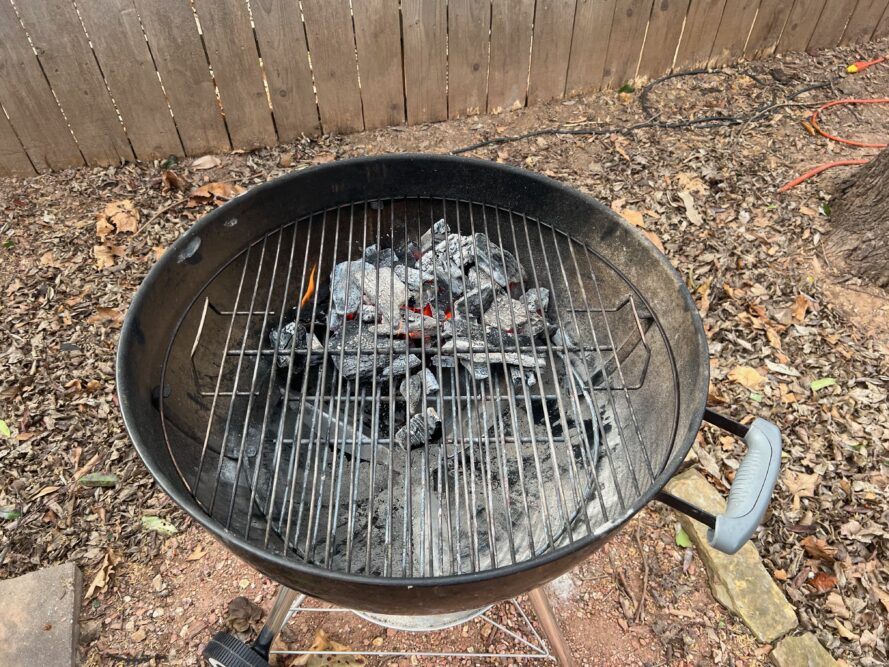
Bank the lit charcoal on one side of the charcoal grate, leaving the other side without fuel underneath it.
An approximately half-and-half arrangement is a useful starting point, but you can adjust the space according to what you’re cooking. A large roast may need more indirect room, while several steaks may call for a larger direct area.
Keep the charcoal on the intended fuel grate or in the approved charcoal baskets, with the air openings unobstructed.
The important part is leaving enough space for the food to sit completely away from the burning fuel. A roast that extends over the charcoal will still receive direct heat along that edge.
Add a Drip Pan When Needed
For food that will release a substantial amount of fat, place a suitable drip pan on the charcoal grate beneath the indirect cooking area.
The pan catches drippings and keeps that area cleaner, but it shouldn’t obstruct the airflow or extend into the burning charcoal.
Water is optional. It can help moderate the temperature during low and slow cooking, but you don’t need a water pan for every steak, pork chop or chicken dinner.
Preheat the Grill
Install the cooking grate, close the lid and let the grill heat up.
For indirect cooking, position a thermometer probe near where the food will sit on the side without charcoal underneath it. A reading taken directly above the coals won’t tell you the cooking temperature in the indirect area.
Adjust the vents for the temperature you need, allowing time for each change to take effect. On a conventional kettle, positioning the lid vent over the indirect side is a useful starting arrangement.
How to Set Up Two-Zone Heat on a Gas Grill
On a gas grill with independently controlled burners, leave the burner or burners underneath the indirect cooking area turned off.
Follow the manufacturer’s lighting and preheating instructions, then establish the two zones.
On a three-burner grill, you might leave one or two burners lit and cook above the unlit section. On a four-burner grill, lighting the two burners on one side leaves the other side available for indirect cooking.
Adjust the active burners to produce the temperature needed near the food, and keep the lid closed during indirect cooking.
The lid thermometer may sit above a different part of the grill, so a probe near the food is more useful when you need to maintain a particular cooking temperature.
A single-burner grill may require an approved heat deflector or another arrangement specified by the manufacturer rather than this side-by-side setup.
How to Cook Using Both Zones
Sear First, Then Finish Indirectly
For a thick steak or pork chop, brown the outside over direct heat, turning as needed, then move it to the indirect side to finish cooking.
Close the lid and monitor the internal temperature so the center reaches the doneness you want without continuing to expose the outside to the strongest heat.
Searing develops flavor and texture, but it doesn’t seal in the juices. Avoiding overcooking is still important, whichever zone you’re using.
Cook Indirectly, Then Sear
You can also reverse the order by cooking a thicker cut over indirect heat first and moving it over direct heat near the end.
This is the basic idea behind reverse searing.
Begin the sear before the meat reaches its final target temperature because the direct-heat finish will continue cooking it. The amount of allowance depends on the thickness of the cut and how hot and long the sear will be.
This approach is particularly useful for thick steaks and chops. A thin cut may cook through before it benefits from a separate indirect stage.
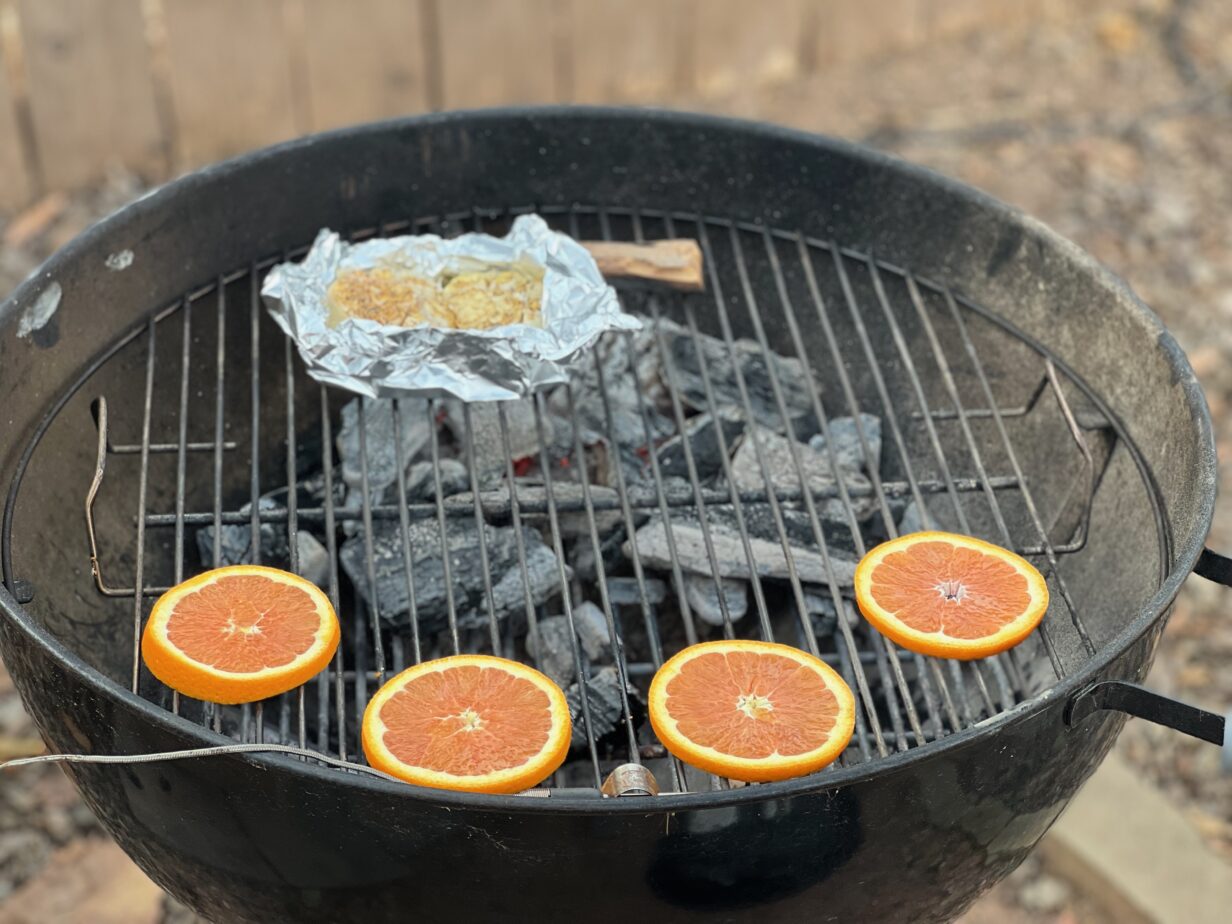
In the photo below, I have heads of garlic in a foil boat directly over the charcoal, with orange slices on the indirect side of the grill. I’ll place small pieces of salmon on the orange slices so they can cook gently without the delicate skin sticking to the grates.
Use Indirect Heat for the Entire Cook
Not every food needs to visit the direct side.
A whole chicken, pork loin, meatloaf or rack of ribs can remain in the indirect area with the lid closed and the grill running at the recipe’s cooking temperature.
Check the side nearest the fire occasionally and rotate the food if it’s cooking faster there.
For a recipe that uses indirect cooking followed by a direct-heat finish, see my Smoked and Grilled Chicken Breast.
Can You Smoke Meat With a Two-Zone Setup?
Yes, provided you can maintain the required cooking temperature and keep the food protected from direct heat.
On a charcoal grill, add a modest amount of dry smoking wood to the fuel. Pecan, oak, hickory, apple and cherry are all useful options, depending on the food and the flavor you enjoy.
On a gas grill, use a smoker box or another smoke-producing arrangement approved for the cooker.
For a longer charcoal cook, you’ll also need a way to maintain the fire. A large batch of charcoal lit all at once can produce more heat than you need at the beginning and still run short before a pork butt is finished.
The Snake Method and Minion Method explain ways to gradually ignite charcoal for longer cooks.
Those arrangements control how the fuel burns, while two-zone cooking describes where the food sits in relation to the heat source.
What Temperature Should You Use?
Two-zone cooking doesn’t require one particular temperature.
For low and slow barbecue, the indirect area may need to hold around 225°F to 275°F (107°C to 135°C). A roasting recipe may call for 325°F to 375°F (163°C to 191°C), while a direct-heat sear uses a much hotter cooking surface.
Follow the recipe and measure the temperature where the food is cooking.
On a charcoal grill, the amount of burning fuel, available airflow and distance between the charcoal and food all affect the heat. On a gas grill, the burner settings and layout determine how much heat reaches each area.
You don’t need both zones to produce the same temperature, since having different cooking conditions is the reason for setting them up.
Common Two-Zone Grilling Mistakes
Leaving Too Little Indirect Space
If the food overhangs the charcoal or lit burner, part of it is still cooking over direct heat.
Plan the fuel arrangement around the size of the food before lighting the grill, and leave enough room to move pieces when needed.
Leaving the Lid Open During Indirect Cooking
Indirect cooking relies on heat circulating inside the closed grill.
Open the lid when you need to turn, check or move the food, then close it again so the cooking environment can recover.
Treating the Indirect Side as a Holding Area
Food continues cooking on the indirect side, so don’t leave a finished steak there while you wait for everything else.
Remove food when it reaches the intended doneness and rest or hold it appropriately for the recipe.
Waiting Too Long to Move the Food
If the surface is browning faster than the center is cooking, move the food before it becomes scorched.
The same applies when a sugary sauce begins darkening or fat drippings create flames beneath the meat. Use the indirect area to move food away from flare-ups rather than leaving it directly over the fire.
Relying Entirely on the Lid Thermometer
The thermometer in the lid measures its own location, which may be closer to the fire than the food is.
Use a grate-level probe near the food when maintaining a specific indirect cooking temperature, and check the meat itself with an accurate food thermometer.
For the full cooking routine, see smoking on a kettle grill or smoking on a gas grill. The smoker-box guide explains one way to add smoke on the heated side of a gas grill while the food stays in the indirect area.
Getting Comfortable With Two-Zone Cooking
Start with a meal that leaves you enough open grate space to move the food as needed.
Once you see how the direct side browns the surface and the indirect side lets you continue cooking more gently, you’ll have a better feel for when to move things.
For more help managing the fire, see my Smoker Temperature Control Guide, or explore the different cooker types in my Ultimate Guide to Smokers.
Don’t Lose This Article
Enter your email and I’ll send a link to this article straight to your inbox so you can read it anytime.