

How to Use a Charcoal Chimney Starter

I may earn a commission if you buy through links on this page, at no extra cost to you.
There are plenty of ways to light charcoal for a smoker or grill, but a charcoal chimney starter is one of the easiest ways to get a batch burning without lighter fluid. You load the charcoal into the top, light a small fire underneath it and let the chimney do the work while you get the rest of the cooker ready.
$19/year
Less than $1.60 a month, billed annually.
Renews yearly until canceled.
Already a member? Log In
I’ve recommended the Weber chimney starters for years, and the photos below show how I use one with newspaper, along with an alternate setup I demonstrated using a gas grill’s side burner. The basic process works with lump charcoal or briquettes, although the amount you light should match the cooker and the way you plan to use it.
How a Charcoal Chimney Starter Works
A charcoal chimney looks like a large metal cylinder with a handle, a raised grate inside and air holes around the bottom. The grate holds the charcoal above the newspaper or fire starter, leaving room underneath for the flame and incoming air.
As the fire heats the charcoal, hot air rises through the cylinder and draws fresh air in from below. The charcoal near the bottom catches first, then the fire works upward through the load. Keeping those air openings clear is what allows the chimney to get the charcoal burning without having to soak it in anything.
What You’ll Need
You’ll need a charcoal chimney starter, plain cooking charcoal, newspaper or a fire starter approved for charcoal cooking, a long lighter and dry heat-resistant barbecue gloves. Long tongs are useful for arranging the lit coals after you pour them into the cooker.
Choose a chimney with a sound handle, an intact heat shield and enough capacity for the amount of charcoal you normally light. A smaller chimney can be useful when you only need a small starting batch for a low and slow cook, while a larger one gives you room for a bigger grilling fire.
You can see the Weber charcoal chimney starter on Amazon if you need one, but the instructions below are about using the tool rather than buying a particular brand.
Get My Free Smoking Chart
Get my printable Smoking Times & Temperatures chart in °F and °C, ready to keep beside the smoker.
Where to Set the Chimney
Use the chimney outdoors on the charcoal grate of a suitable grill or smoker, following the equipment’s instructions and required clearances. Remove the cooking grate, make sure old cold ash isn’t blocking the air openings and leave the lid off while the chimney is lighting.
A hard surface isn’t automatically a safe lighting surface. Don’t light the chimney directly on a concrete patio or driveway, since the concentrated heat can cause concrete to crack or spall, and keep it off wood, composite decking, plastic tables and other surfaces that can burn or melt.
Decide where the empty chimney will go before lighting it, since it will still be extremely hot after the charcoal has been poured out. Keep that cooling spot away from foot traffic, children and pets.
How Much Charcoal Should You Light?
You don’t need to fill the chimney every time you use it. The amount depends on whether you’re lighting the main cooking fire, starting a small fire in a larger supply of unlit fuel or adding heat during a cook.
In the photos below, I loaded the chimney about three-quarters full. That shows the amount used for that batch rather than a required fill level for every smoker. For the Minion method or the snake method, follow the starting quantity for that setup instead of automatically pouring in a full chimney of burning coals.
Too much lit charcoal can get a low and slow cooker hotter than you intended, especially when it holds heat well. Start with the quantity recommended for your cooker and method, then make a note of how it behaves so you have a useful reference for the next cook.
Lump Charcoal or Briquettes?
I prefer lump charcoal, although plain briquettes work just fine in a chimney as well. Use whichever your cooker permits and your cooking method calls for, keeping in mind that uniform briquettes are easier to count while irregular lump pieces need a little more attention when loading.
Keep the loose dust and tiny fragments out of the chimney as much as possible, and don’t pack the charcoal tightly enough to block the air spaces. Skip instant-light charcoal or charcoal treated with lighter fluid, and don’t add lighter fluid to the chimney. My guide to lump charcoal vs briquettes covers the differences between the two fuels.
Prepare the Newspaper
With the chimney cold and empty, turn it upside down so you can reach the recessed area below the charcoal grate.

Roll a section of plain newspaper loosely into a burrito shape and place a couple of these rolls into the recess, as shown below. Leave enough space for air to move through rather than stuffing the entire compartment solid with paper.

Turn the chimney upright and place it on the cooker’s charcoal grate before lighting anything. The photo below shows the chimney upright; use the charcoal grate for the actual lighting setup rather than treating any hard surface as suitable.

Fill the Chimney and Light the Paper
Pour in the amount of dry charcoal you need, staying within the chimney manufacturer’s capacity. Let the pieces settle naturally rather than pressing them down.

Use a long lighter to ignite the newspaper through the lower openings in several places, keeping your hands and face away from the chimney. Once the paper is burning, leave the chimney upright and let the fire work its way into the charcoal.


Stay nearby while it lights, and don’t put the grill lid over the chimney. Some smoke during startup is normal, especially when using newspaper, but the fire needs an open path for air to enter below and hot gases to escape above.
How Do You Know When the Charcoal Is Ready?
Look at the charcoal rather than relying on a seven-minute timer or any other exact lighting time. A batch often takes around 15 to 20 minutes, but the amount and type of charcoal, the starter and weather conditions can change that considerably.
For briquettes, look for a well-established glow lower in the chimney and the top pieces beginning to develop a light gray coating of ash. Flames may reach the top as the fire spreads, but a brief flame by itself doesn’t mean the whole batch is ready.
Lump charcoal won’t develop the same even coating as uniform briquettes, so look for established burning through the load and glowing edges on the upper pieces. You want the charcoal burning on its own after the newspaper or starter has done its job, rather than pouring out mostly cold fuel.
You’ll notice the charcoal changes from lump to briquettes in the next photo. I lost the finished photos from the lump charcoal session, so these came from another session using briquettes. The chimney works with either one.

Pour the Lit Charcoal Into the Cooker
Before lifting the chimney, clear the path to the cooker and have the charcoal grate or basket ready to receive the fuel. Put on dry heat-resistant barbecue gloves and use the main handle and helper handle as designed, keeping the hot cylinder away from your body.
Pour slowly from close to the receiving grate or basket so the coals land where intended without a large drop. Keep your face away from the rising heat, and use long tongs to position the fuel rather than trying to move it by hand.

For two-zone grilling, arrange the charcoal to leave an area without direct heat underneath the food. For a Minion setup, place the lit starting batch where it will ignite the unlit reserve as intended, and for a snake, add it to the starting end of the charcoal row.
Once the coals are in place, put the cooker’s required components back in position and bring it to the cooking temperature called for in your recipe. A lit chimney starts the fire, but the smoker or grill still needs time to warm up and settle before the food goes on.
Lighting Without Newspaper
A purpose-made charcoal fire starter is a convenient alternative to newspaper. Following its directions, place it on the charcoal grate, light it and set the loaded chimney over it so the flame reaches the charcoal through the raised bottom grate. You still need the same open airflow and safe lighting location.
Another method I’ve used is to set the loaded chimney over the side burner on my gas grill, as shown in the photos below. The burner supplies the flame underneath the charcoal, so there’s no newspaper to prepare or paper ash to deal with. Make sure the chimney sits securely on the burner grate and has plenty of clearance from anything the concentrated heat could damage.
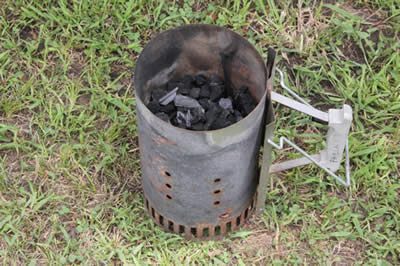
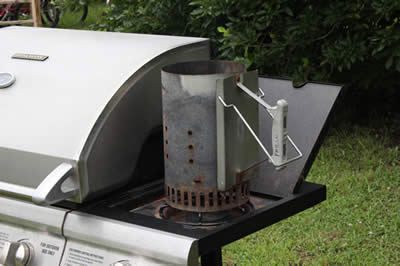
Light the side burner and adjust the flame so it reaches the charcoal through the bottom of the chimney. In the original demonstration, I used the high setting, although the flame you need will depend on the burner. Stay nearby while the charcoal catches, then turn the burner off once the coals are burning on their own.
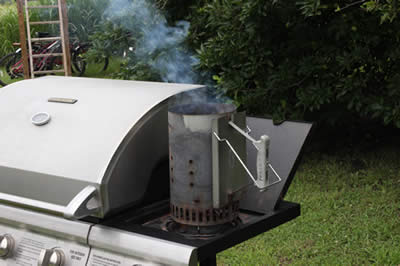
Once the charcoal is ready, put on your barbecue gloves and transfer it to the smoker or grill just as you would with the newspaper method. The chimney and the side-burner grate will both be hot afterward.
If the Chimney Won’t Stay Lit
If the paper burns away and the charcoal never catches, check whether the newspaper was packed too tightly, the bottom openings are blocked or the charcoal is damp. A loosely packed starter chamber lets the flame reach the fuel while still supplying the air it needs.
A fire starter intended for charcoal can help when newspaper burns away too quickly, but don’t pour any liquid fuel into a chimney that has been lit. If you need to reload the paper or rearrange the charcoal, let the chimney and its contents cool completely before turning it over or handling them.
Wind can interfere with lighting or scatter sparks and burning paper. Keep the chimney in an appropriate outdoor location with its required clearances, and postpone lighting if conditions make it difficult to control safely rather than moving it into a garage or enclosing it in a makeshift shelter.
Adding Another Batch During a Cook
If you need more lit charcoal, repeat the lighting process in a separate, suitable location and add the new coals through the cooker’s intended fuel access. Keep the chimney away from the food so startup smoke and loose paper ash aren’t directed across it.
You don’t always need to prelight every addition of fuel, since methods such as the Minion and snake deliberately ignite unlit charcoal as the cook progresses. The choice depends on your setup and whether you need an immediate boost in heat or a reserve that lights gradually.
Let the Chimney Cool Before Putting It Away
After pouring, check that the chimney is empty and set it on the safe, heat-resistant location you prepared earlier. An empty chimney can still cause a burn or damage a surface, so leave it alone until the metal and any remaining residue are completely cold.
Store it dry once it has cooled, and check the handle, rivets, heat shield and charcoal grate periodically for damage. With a sound chimney, clear airflow and the right amount of charcoal, getting the fire started becomes a fairly simple part of the cook.
For the cooker setup after the coals are lit, use the charcoal smoker guide or kettle guide. Both are part of my Ultimate Guide to Smokers.

Don’t Lose This Article
Enter your email and I’ll send a link to this article straight to your inbox so you can read it anytime.
Join the Smoking Meat Community
Have a question about this technique or want help with your next cook?
Join the conversation with other backyard pitmasters.
From my backyard to yours
Jeff’s Handcrafted
Seasoning and Sauce
The rubs and sauces I use in my own backyard
and throughout these recipes.
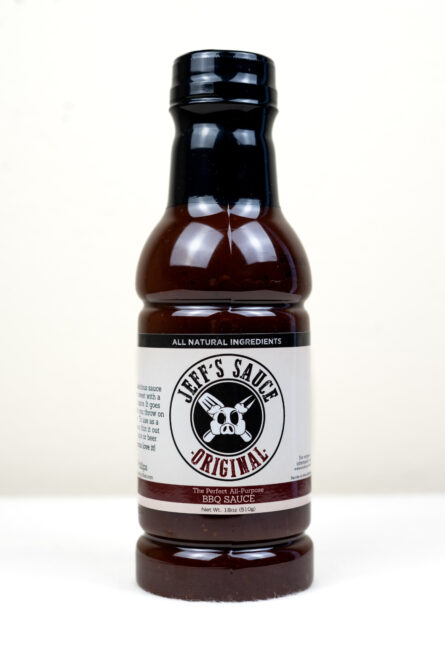
CLASSIC BARBECUE
Original BBQ Sauce
Rich tomato flavor, balanced sweetness and a gentle kick.
$8.99per bottle
Shop Now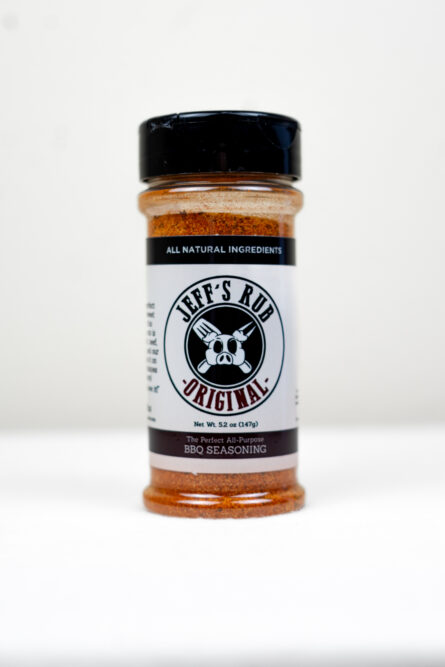
THE SIGNATURE BLEND
Original Rub
Sweet, savory and a touch of heat for your next cook.
$8.99per bottle
Shop Now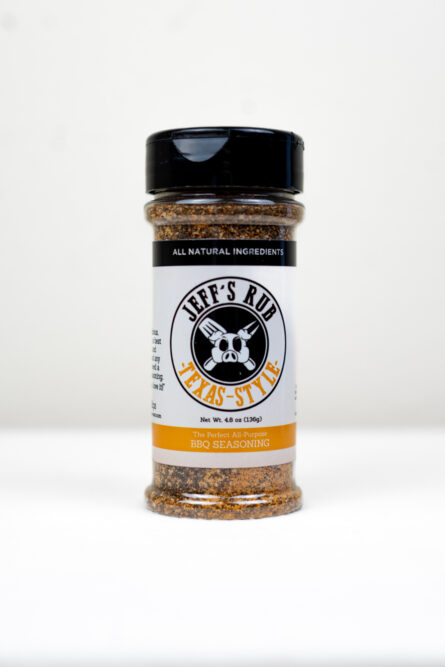
BOLD & PEPPERY
Texas Style Rub
Pepper forward flavor for brisket, steaks and more.
$8.99per bottle
Shop Now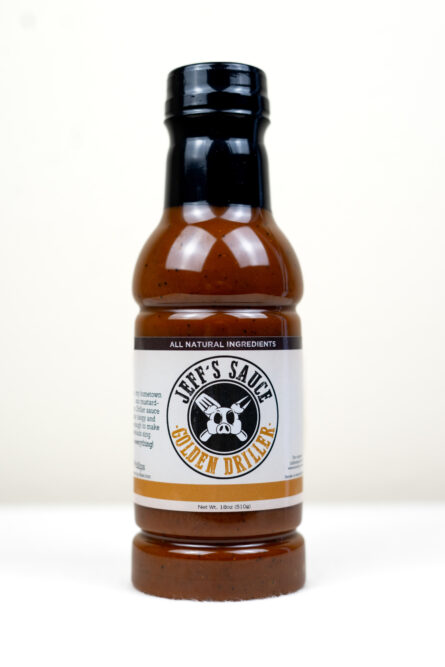
MUSTARD BBQ SAUCE
Golden Driller
Smooth mustard tang with just the right sweetness.
$8.99per bottle
Shop NowFind your next favorite at Thin Blue Foods

Thanks for the read. Just wanted to mention I like to use the paper from the bag of charcoal rather than news print. This way I don’t have a bag to throw away and something about all that ink makes me a little uneasy. I do appreciate the tip about lighting the chimney on a burner, never occurred to me before. Thanks also for mentioning the Minion method.
Regards,
Jeff A
Hey Jeff, good article, enjoyed it, have you ever considered doing a cook using a cardboard box smoker. I have one as well as my 5 real smokers. Makes a nice alternative for someone who doesn”t want to spend a lot on a smoker.
I’ve seen those but never really tried using one.. I assume you are able to hold temps in normal smoking ranges (180 to 250 or so)?
Newby here…going to smoke 2 chickens this weekend…would you say that one chimney container of hot coals will do the trick (is that enough for about 3 – 4 hours) and about how much wood chips would you use…I know I have had brisket with entirely too much smoke flavor that ruined it and I don’t want that to happen. Is there a standard measurement to start with and then I can adjust next time to my taste?
Nadia, This is not an easy question since every smoker has a different burn rate for charcoal depending on how well it holds in heat.
What type of smoker are you using and what temperature are you planning to maintain?
I’ve been using a Charcoal Chimney Starter for years with great results. Easier than electric starters and no chemical taste/residue from that stuff in a can. All I use is 1 sheet of newspaper. I use the cheapest one I can find, but I do admit the heat shield and handle are not great, so I need to use a BBQ glove after it heats up. I’m sure the one linked in the article above is made of higher quality material, but in my view they all work the same. YMMV.
I had completed this article and i love it. Thank for sharing, I wait the next article in this subject. Thanks !
Thank you so much for the website its really so educational.
How could I go about making a drum smoker?
you don’t need to go through the work of making one just check out the pit barrel cooker company, i bought one of their cookers an it works great
Hi Jim,
Using the charcoal chimney, I used newspaper as you suggested. Since newspapers have gone digital the alternative method that I use is Weber starter cube. I place a small piece of aluminum foil on the cooking grate and put 2 Weber starter cubes. Light the cubes and then place the filled charcoal chimney on top of the cubes. If I’m in a real rush, I’ll use 3 Weber cubes.
Hi Jeff
I must say you really explain all your recipe’s and instructions exstremely well, it’s a pleasure to follow your directions.
Thanks Jeff for making things easy and understandable.
i got a master forge charcoal smoker, is it a good idea to cure it before i use it? we are new to smoking with this. going to purchase your book, need lots of direction.