
How to Brine Chicken for Smoking
Smoking-Meat.com is supported by its readers. We may earn an affiliate commission at no extra cost to you if you buy through a link on this page.
If you have ever wondered exactly how to brine chicken for smoking, including how much salt to use, how long to leave the chicken in the brine, and whether a wet brine or dry brine works best, this guide will walk you through the entire process step by step.
Brining is one of the simplest ways to improve smoked chicken because it helps the meat retain more moisture during cooking and seasons it more evenly throughout. It does not guarantee juicy chicken if you overcook it, but it does give you a little more room for error and can make your results more consistent.
If my recipes and barbecue guides have helped you over the years, becoming a member is one of the best ways to support my family's business. As a thank you, you'll enjoy every recipe and article completely ad free for less than $2 a month.
Ad free • Instant access • Cancel anytime
If you are still deciding whether brining is worth the extra effort, you may want to read my article on whether you should brine chicken before smoking first.
Wet Brine vs Dry Brine
There are two common ways to brine chicken, and both can produce excellent results when done properly.
A wet brine involves soaking the chicken in a saltwater solution for several hours, while a dry brine simply means applying salt to the surface of the chicken and letting it rest uncovered in the refrigerator.
Both methods improve moisture retention and seasoning, but they differ in convenience and in how they affect the skin.
| Method | How It Works | Best For | Advantages | Thinks to Know |
|---|---|---|---|---|
| Wet Brine | Chicken is submerged in a saltwater solution | Whole chickens and large batches | Excellent moisture retention and even seasoning | Requires refrigerator space and a container |
| Dry Brine | Salt is applied directly to the chicken | Whole chickens or parts | Simpler, less messy, and helps dry the skin | Requires planning ahead |
For most backyard cooks, dry brining is the simplest and most practical approach because it improves both flavor and skin texture without taking up a lot of refrigerator space.
My Preferred Method: Dry Brining
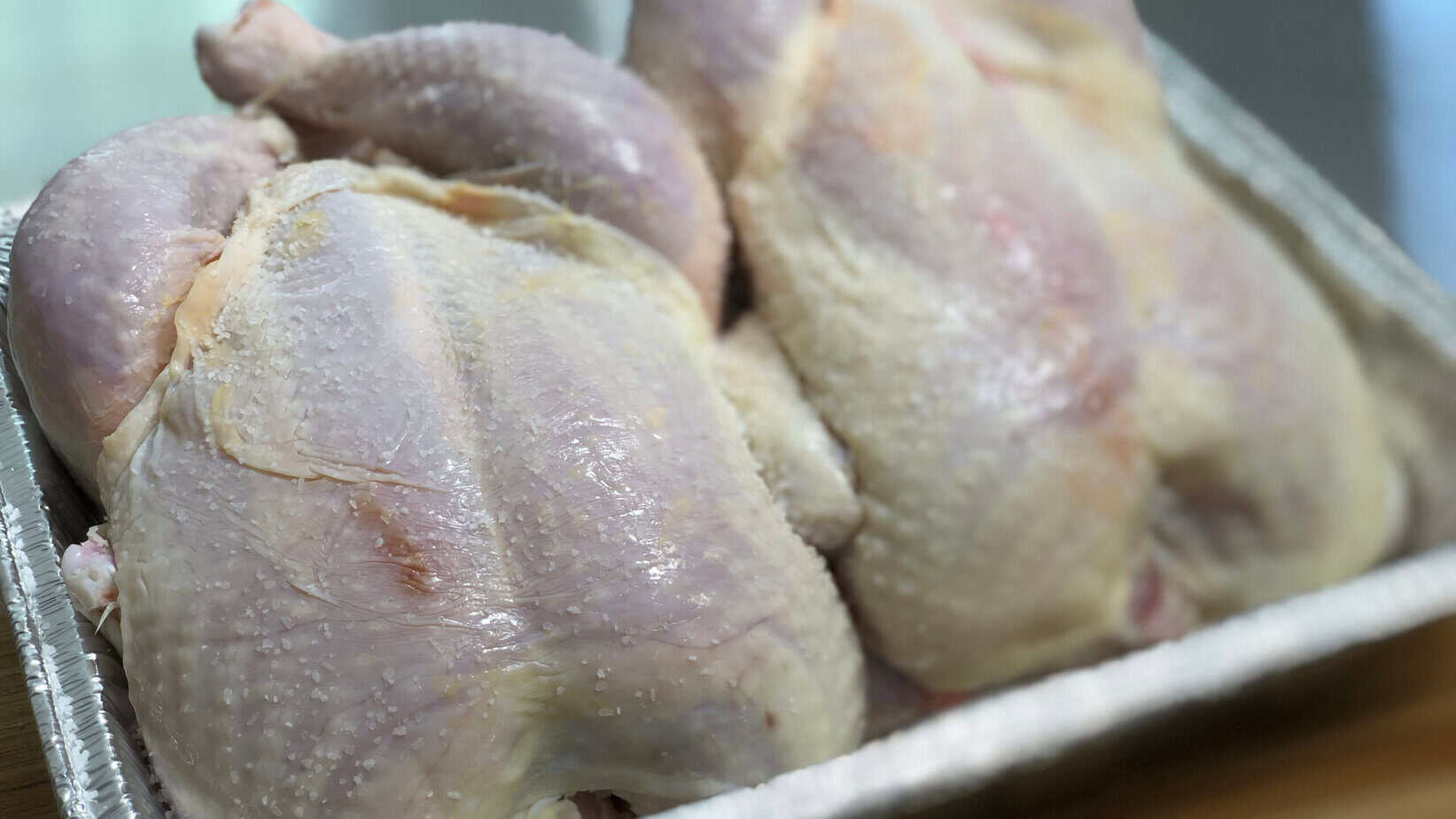
Although both methods work well, I usually prefer dry brining because it is simple, effective, and tends to help the skin tighten up better during the cook.
When you salt the chicken and leave it uncovered in the refrigerator, the salt first draws moisture to the surface. That moisture dissolves the salt and is then reabsorbed back into the meat, carrying seasoning deeper inside. At the same time, the uncovered skin begins to dry, which is exactly what you want if you are trying to avoid tough and rubbery skin.
Basic Wet Brine Recipe
If you prefer a traditional wet brine, this simple formula works well for most chicken cooks.
| Ingredient | Amount |
|---|---|
| Water | 1 gallon |
| Kosher salt | 1 cup |
| Brown sugar (optional) | 1/2 cup |
| Garlic, herbs, pepper (optional) | To taste |
Stir until the salt is completely dissolved, then submerge the chicken and refrigerate for the recommended amount of time shown below.
How Long to Brine Chicken
The ideal brining time depends on the size and type of chicken you are cooking.
| Chicken Cut | Wet Brine Time | Dry Brine Time |
|---|---|---|
| Whole chicken (4 to 6 pounds) | 8 to 12 hours | Overnight |
| Bone in breasts | 4 to 6 hours | 6 to 12 hours |
| Boneless breasts | 2 to 4 hours | 4 to 8 hours |
| Thighs and drumsticks | 2 to 6 hours | 4 to 12 hours |
| Wings | 2 to 4 hours | 4 to 8 hours |
In most cases, overnight dry brining is about as close to foolproof as it gets.
Do You Need to Rinse the Chicken?
If you use a properly measured brine, there is usually no need to rinse the chicken afterward.
Simply remove it from the brine, pat it dry thoroughly, and place it back into the refrigerator uncovered for a few hours if possible. This extra drying time helps the skin tighten up better during the cook.
Brining and Skin Texture
One concern some people have is that brining can make the skin soggy, especially if they use a wet brine.
That can happen if the chicken goes directly from the brine to the smoker without being dried properly.
Whether you wet brine or dry brine, the key is to pat the skin dry and allow it to air dry uncovered in the refrigerator. This removes excess surface moisture and helps you achieve better bite through skin when the chicken cooks.
For a more detailed explanation, see my guide on how to fix tough and rubbery chicken skin when smoking chicken.
Brining Does Not Replace Proper Temperature Control
Brining can help chicken stay juicier, but it does not prevent overcooking.
If you cook chicken too long or take it well past the proper internal temperature, it will still dry out.
That is why I always recommend combining brining with good temperature control and careful monitoring of internal temperature.
The Simple Process
If you want a straightforward method that works consistently, here is what I recommend:
- Season the chicken with kosher salt or your preferred dry brine mixture.
- Place the chicken uncovered in the refrigerator overnight.
- Remove it from the refrigerator and apply your seasoning.
- Smoke it using your preferred temperature method.
- Cook until it reaches the proper internal temperature.
This approach improves moisture retention, enhances seasoning, and helps the skin cook more cleanly.
Frequently Asked Questions
Can you brine chicken too long?
Yes, especially with a wet brine. Leaving chicken in a strong salt solution for too long can affect the texture and make it taste overly salty.
Is dry brining better than wet brining?
Both methods work well, but dry brining is simpler and often produces better skin texture because the surface dries as it rests in the refrigerator.
Can I use table salt instead of kosher salt?
Yes, but because table salt is denser than kosher salt, you will need to use less of it. I recommend sticking with kosher salt whenever possible for consistency.
Should I brine chicken if I am using a salty rub?
If your seasoning already contains a lot of salt, you may want to reduce the salt in the brine or use less rub to avoid over seasoning.
Don’t Lose This Article
Enter your email and I’ll send a link to this article straight to your inbox so you can read it anytime.