

Smoked Pork Belly Recipe
Smoking-Meat.com is supported by its readers. We may earn an affiliate commission at no extra cost to you if you buy through a link on this page.
If you've never smoked pork belly before, you're in for a real treat. Pork belly is the cut that bacon comes from, and when it's seasoned generously, smoked low and slow, and cooked until the fat renders, it becomes rich, tender, and packed with flavor. If you've ever wondered how pork belly becomes bacon, you'll enjoy learning about the curing and smoking process.
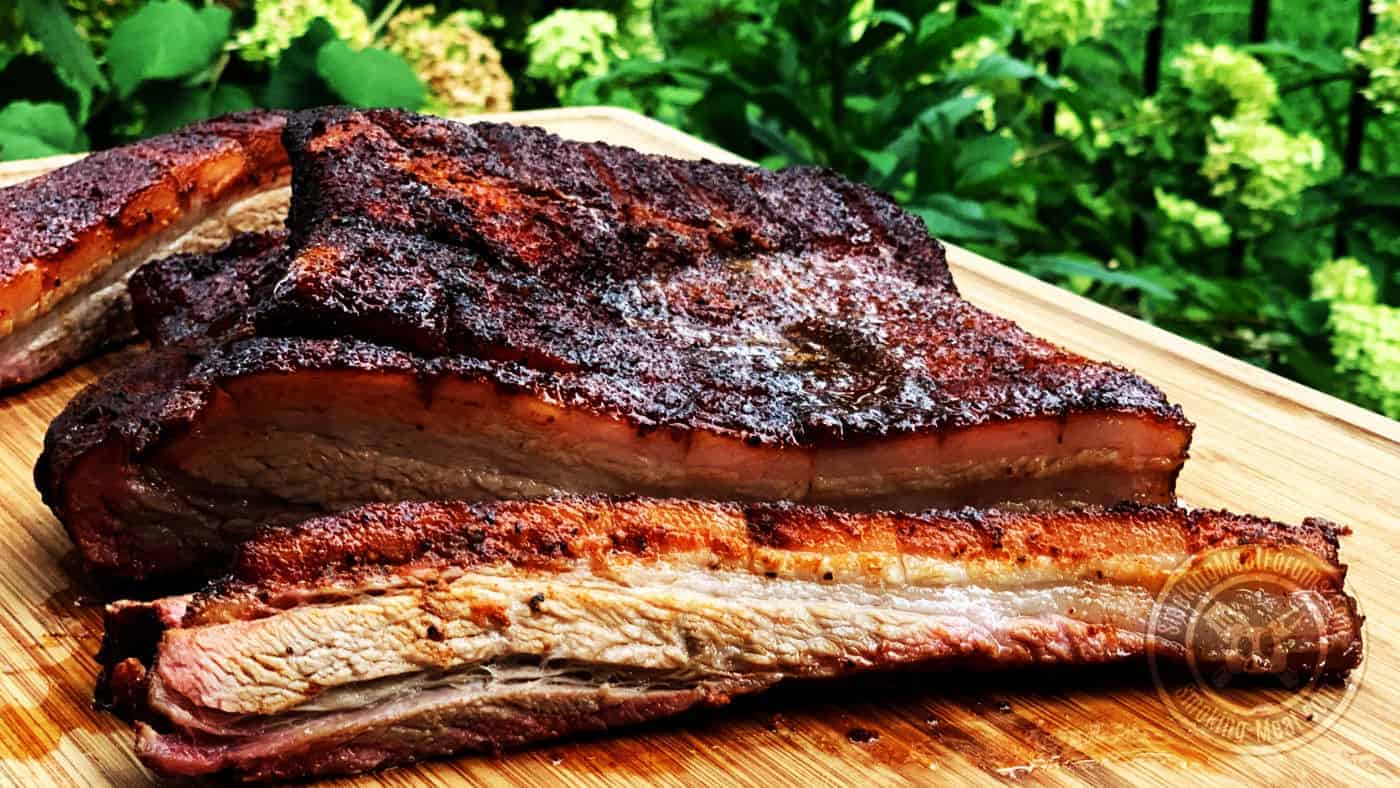
In this recipe, I'll show you how I smoke a whole pork belly using a simple seasoning, sweet fruit wood, and a low cooking temperature until it reaches the perfect texture. Whether you slice it, cube it, or pile it onto a sandwich, smoked pork belly is one of the most rewarding things you can cook on a smoker.
If my recipes and barbecue guides have helped you over the years, becoming a member is one of the best ways to support my family's business. As a thank you, you'll enjoy every recipe and article completely ad free for less than $2 a month.
Ad free • Instant access • Cancel anytime
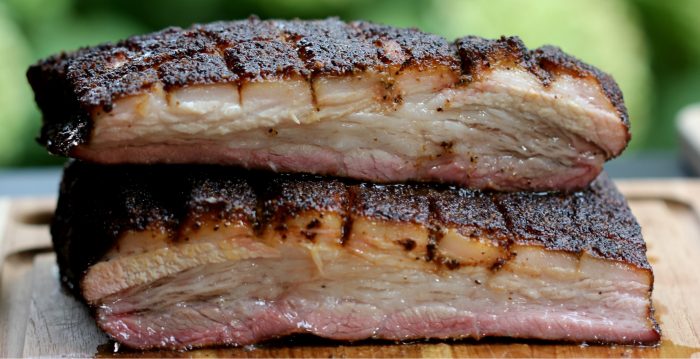
I couldn't decide which rub to use on this cook, so I split the pork belly in half and seasoned one side with my Original Rub and the other with my Texas Style Rub. I'll let you know which one I preferred later in the recipe.
Recipe At A Glance
- Prep Time: 30 minutes
- Cook Time: 6 hours
- Smoker Temperature: 225°F (107°C)
- Target Internal Temperature: 200°F (93°C)
- Rest Time: 15 to 60 minutes
- Recommended Wood: Cherry or Apple
- Difficulty: Easy
- Serves: 10 to 15
Why You'll Love This Recipe
Pork belly has become one of my favorite things to cook on the smoker because it combines the best parts of barbecue in a single cut. You get rich pork flavor, beautifully rendered fat, and a texture that's somewhere between brisket and bacon.
This recipe is simple enough for beginners but produces results that will impress even experienced pitmasters. Once you learn how to smoke pork belly, you'll find yourself looking for excuses to cook it again.
Ingredients
You don't need a long list of ingredients to make incredible smoked pork belly. The rich pork flavor does most of the work, while a simple binder and your favorite barbecue rub create an amazing bark during the cook.
You'll need:
- 1 whole pork belly (skin removed)
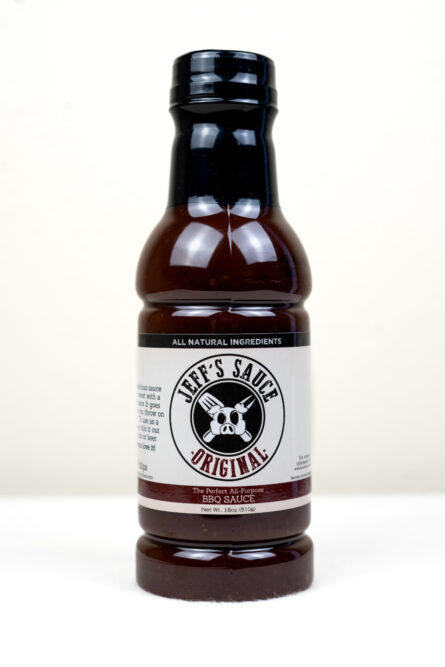
- ¼ cup Jeff's Barbecue Sauce (as a binder)
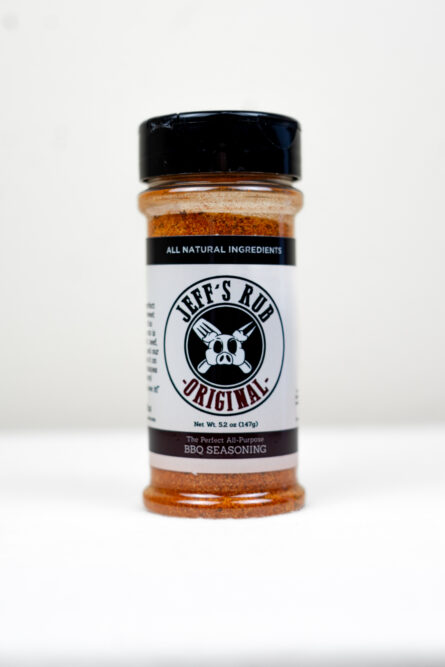
- ½ cup Jeff's Original Rub
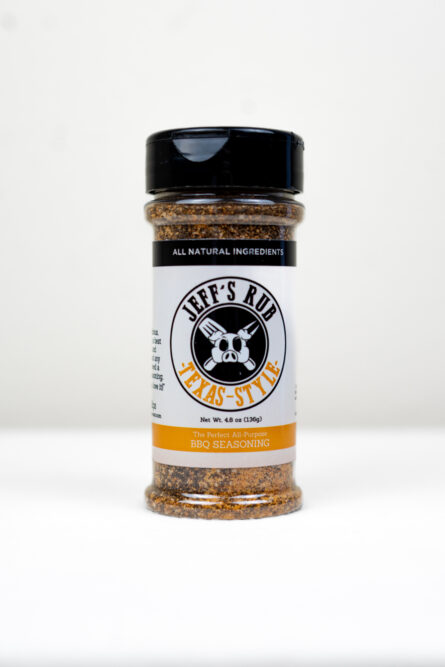
- ½ cup Jeff's Texas Style Rub (optional for comparison)
I used both of my rubs for this cook, seasoning half with my Original Rub and half with my Texas Style Rub just to see which one I liked better. Both were excellent, but I found myself reaching for the Texas Style version because the extra salt paired especially well with the richness of the pork belly.
If you only have one favorite rub, use it with confidence. This recipe is more about technique than seasoning.
Equipment Needed
- Smoker capable of maintaining 225°F (107°C)
- Sharp boning or chef's knife
- Large cutting board
- Instant read or leave-in meat thermometer
- Aluminum foil, butcher paper, or foil pan for wrapping
- Large sheet pan or grill rack for moving the pork belly
Buying Pork Belly
Pork belly has become much easier to find over the last few years. Many Costco stores carry it regularly, and it's also available at many butcher shops, meat markets, and some grocery stores.
Look for a pork belly that's fairly uniform in thickness from one end to the other. This helps it cook more evenly and makes slicing easier when it's finished.
If possible, buy one with the skin already removed. If your butcher has whole pork bellies with the skin on, they'll often remove it for you if you ask.
Most whole pork bellies weigh between 9 and 13 pounds, making them perfect for feeding a crowd or enjoying leftovers throughout the week.
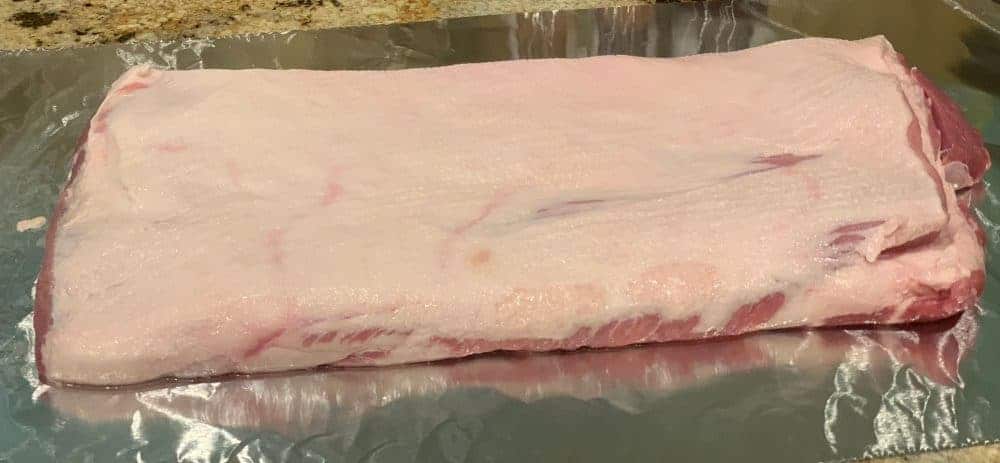
Jeff's Tip: If you're buying pork belly from Costco, try to find one with an even thickness from end to end. It will cook more evenly and make slicing much easier when it's finished.
What Is Pork Belly?
Pork belly comes from the underside of the hog and is the same cut that's used to make bacon. Unlike bacon, however, fresh pork belly hasn't been cured or smoked, allowing you to season and cook it any way you like.
It's made up of alternating layers of meat and fat that slowly render during cooking, creating an incredibly rich and tender bite that's unlike almost any other cut of pork.
When cooked to around 200°F (93°C), much of the fat renders away while the remaining fat becomes soft and buttery.
Jeff's Tip: Don't trim away the fat cap. Much of it will render during the cook, helping keep the meat moist and adding incredible flavor.
Remove the Skin (If Needed)
If your pork belly still has the tough outer skin attached, I recommend removing it before smoking unless you plan to crisp it separately for cracklings.
Using a sharp knife, carefully work between the skin and the fat layer, pulling upward while slicing forward in small sections. Take your time and leave as much of the fat cap intact as possible.
If you're uncomfortable doing this yourself, ask your butcher to remove it before you take it home.
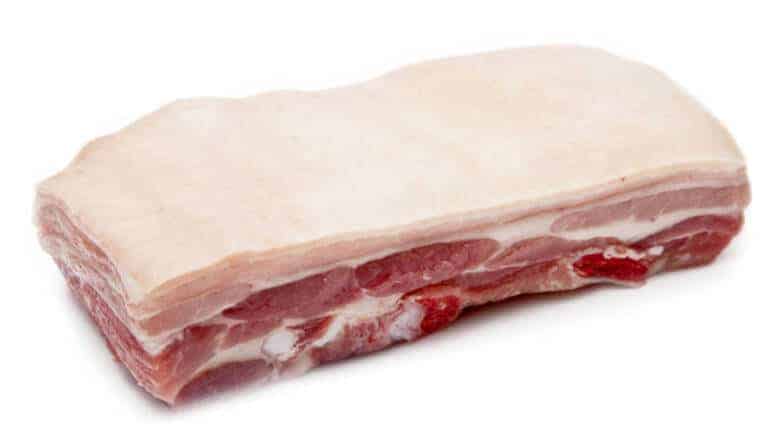
Use a very sharp knife to get between the skin and the fat cap. You want to remove the tough skin but leave as much of the fat cap as possible. Work in small sections to make the job easier and you'll be done in no time. Pull up on the skin as you drag the sharp edge of the knife angled slightly upward against the skin.
As a last resort, there are videos online that will show you the proper technique but I can tell you from experience that the most important part of this job is sharpening the knife.
Score the Fat Cap
Lay the pork belly fat side up on a large cutting board and use a sharp knife to score the fat in a crosshatch pattern about ¼ inch deep and 1 inch apart.
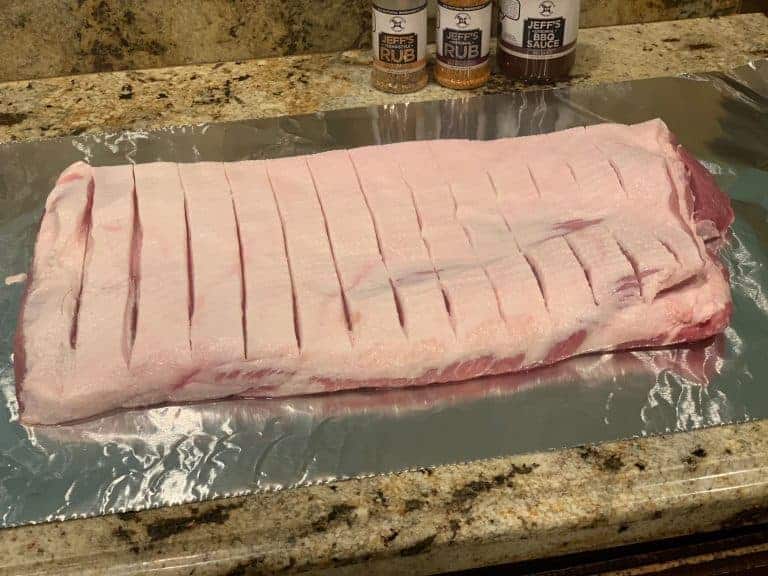
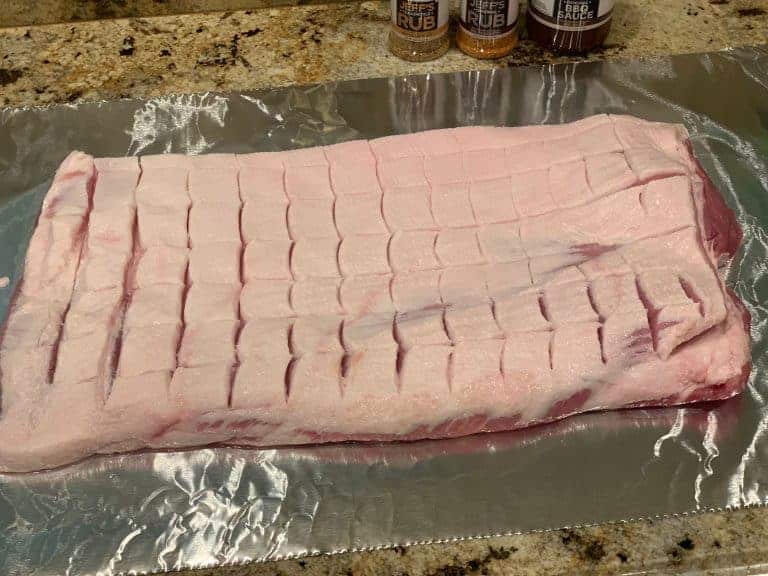
Be careful not to cut all the way into the meat. The goal is simply to increase the surface area so the seasoning can work its way into the fat while it renders during cooking.
As the pork belly smokes, the scored fat will baste the meat below and help create incredible flavor in every bite.
Season the Pork Belly
I like using a light coating of barbecue sauce as a binder because it adds a little extra flavor while helping the rub stick to the meat. Yellow mustard works just as well if that's what you have on hand.
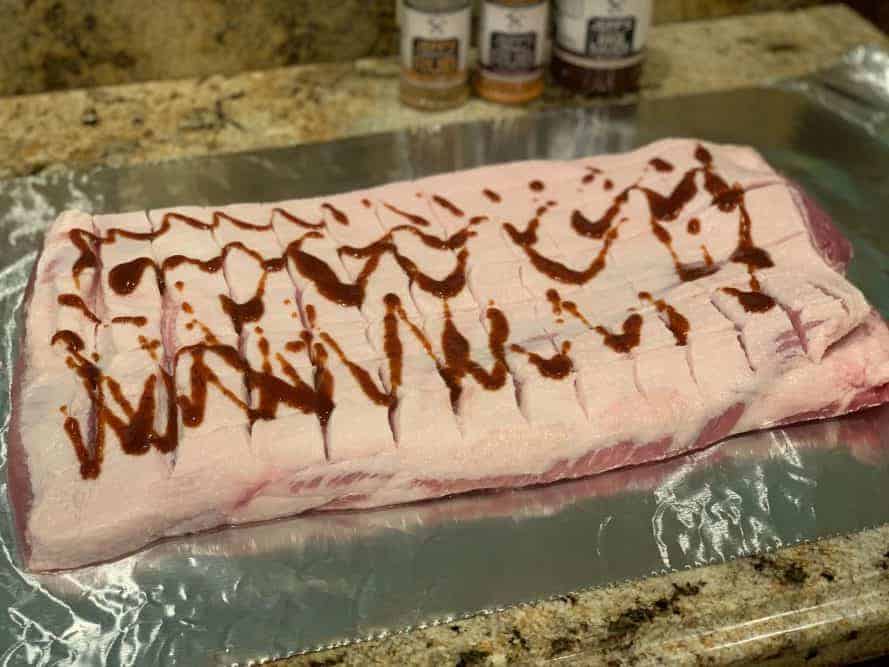
Brush a thin layer over the fat cap, making sure it works down into the scored cuts.
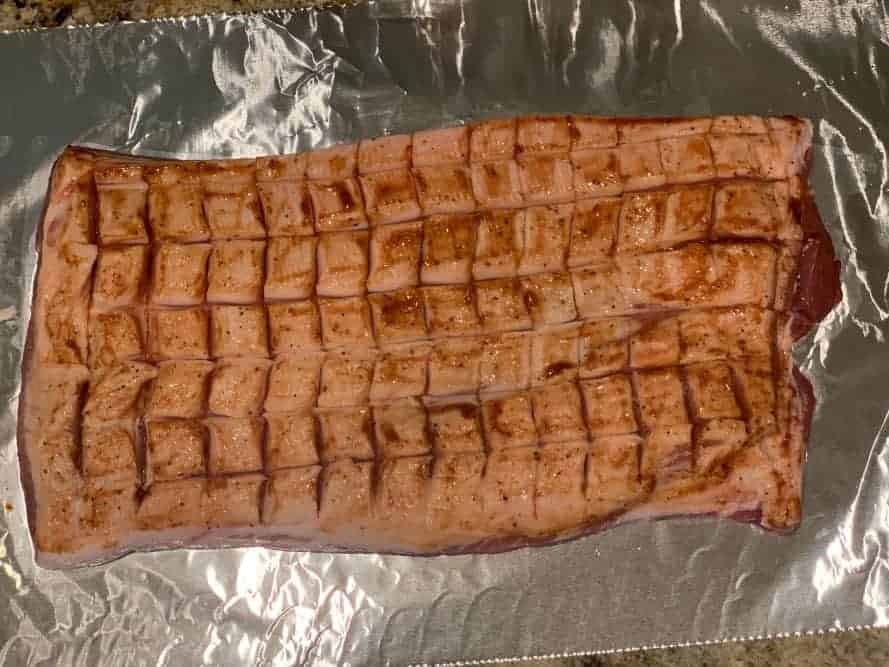
Season generously with your favorite barbecue rub. I used Jeff's Texas Style Rub on one half and Jeff's Original Rub on the other so I could compare them side by side, but either one works great.
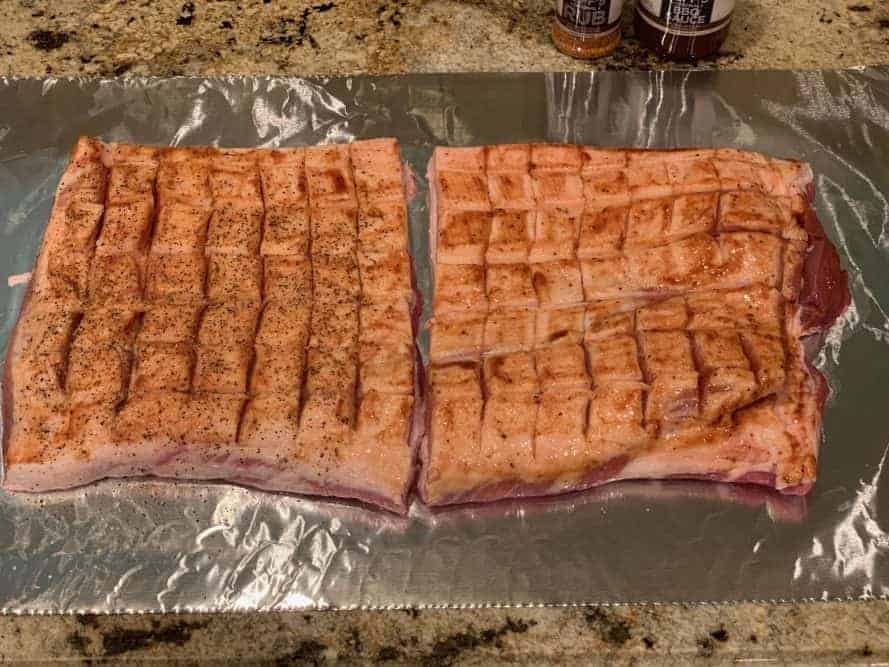
Don't be shy with the seasoning. Pork belly is rich and can handle a generous coating of rub.
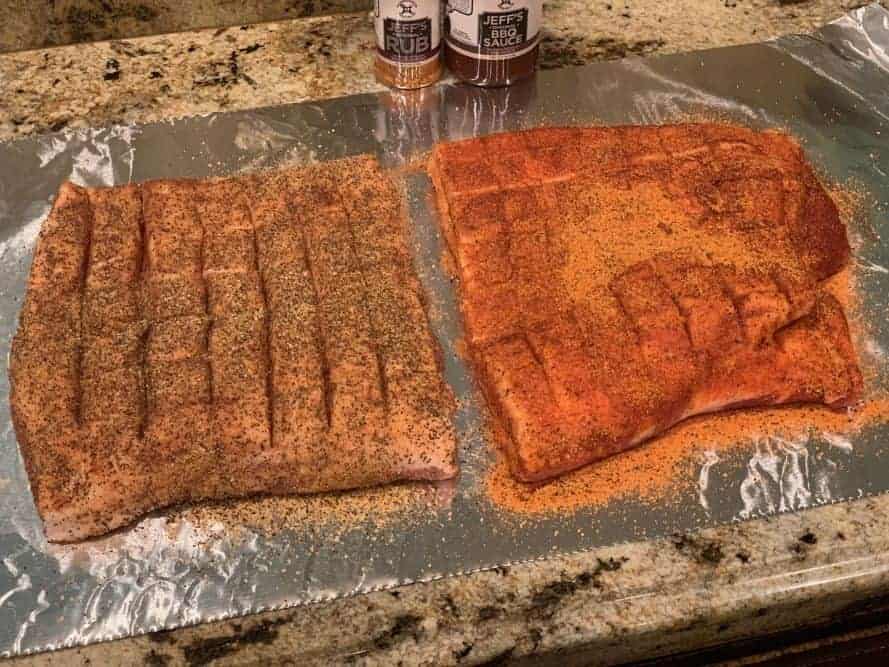
Jeff's Tip: Let the seasoned pork belly sit for 15 to 30 minutes while the smoker comes up to temperature. This gives the rub time to hydrate and adhere better during the cook.
Season the Meaty Side
Flip the pork belly over and repeat the same process on the meat side using a light coating of barbecue sauce followed by a generous layer of rub.
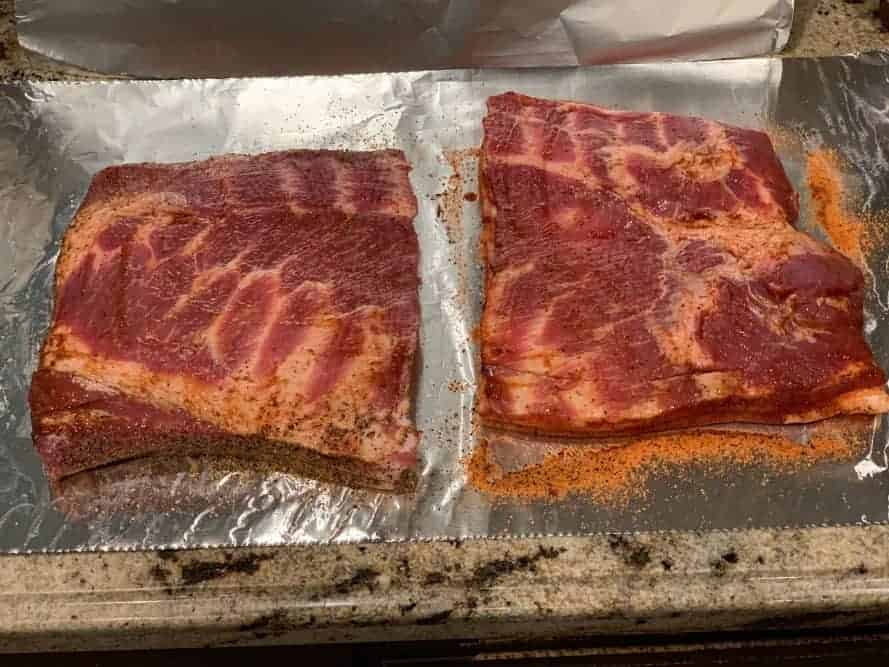
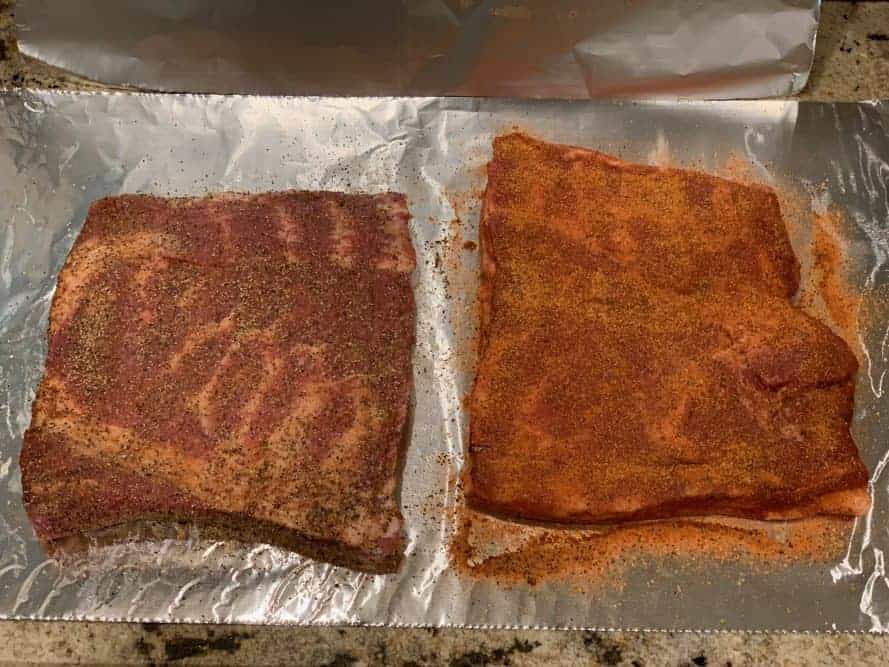
If you've cut the belly into smaller pieces like I did, place them on a grill pan or pan with a rack before moving them to the smoker. This makes them much easier to handle throughout the cook.
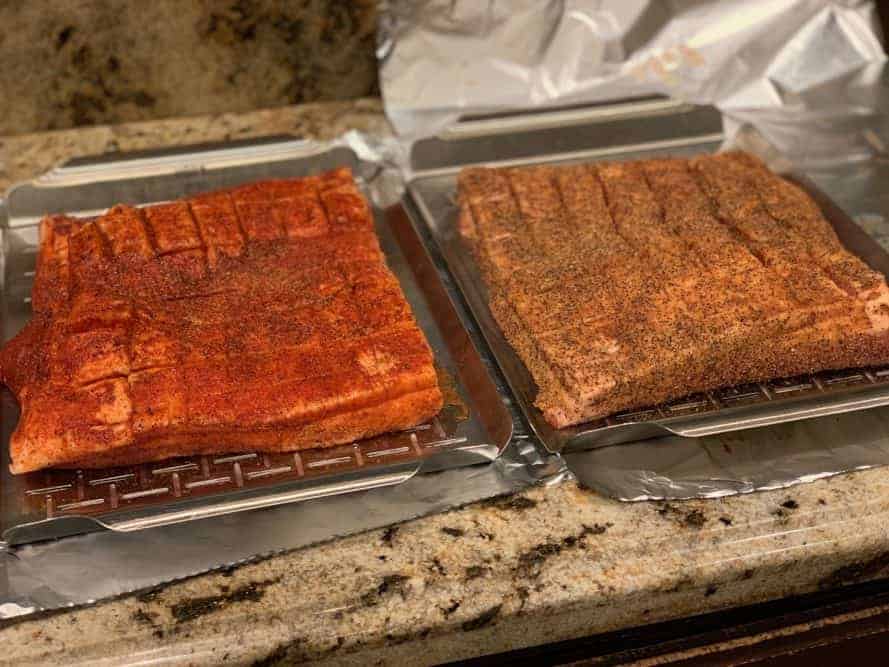
When it's time to smoke, place the pork belly fat side up so the rendering fat naturally bastes the meat as it cooks.
Original Rub vs Texas Style Rub
I used both rubs on the pork, the Texas style rub on one half and the original rub on the other half and while both of them were really good in their own way, I definitely preferred the Texas style rub. I think this was because of the saltiness.
The original rub is very low on salt and that's a good thing but sometimes you want a little more salt so you can use the Texas style rub for that or you can just salt the meat a little more before applying the original rub.
Try both of these if you get a chance and be sure to let me know which one you liked better in the comments below.
Set Up the Smoker
Prepare your smoker for indirect cooking at 225°F (107°C). If your smoker uses a water pan, fill it with hot water before you begin cooking.
For smoke flavor, I recommend cherry, apple, or a combination of the two. These woods provide a mild sweetness that complements pork belly without overpowering it.
Once the smoker is producing clean smoke and holding a steady temperature, it's time to get the pork belly on the grate.
Jeff's Tip: Wait until the smoke turns thin and light blue before adding the meat. Thick white smoke can leave the pork belly tasting bitter.
Smoke the Pork Belly
Place the pork belly on the smoker grate fat side up and close the lid.
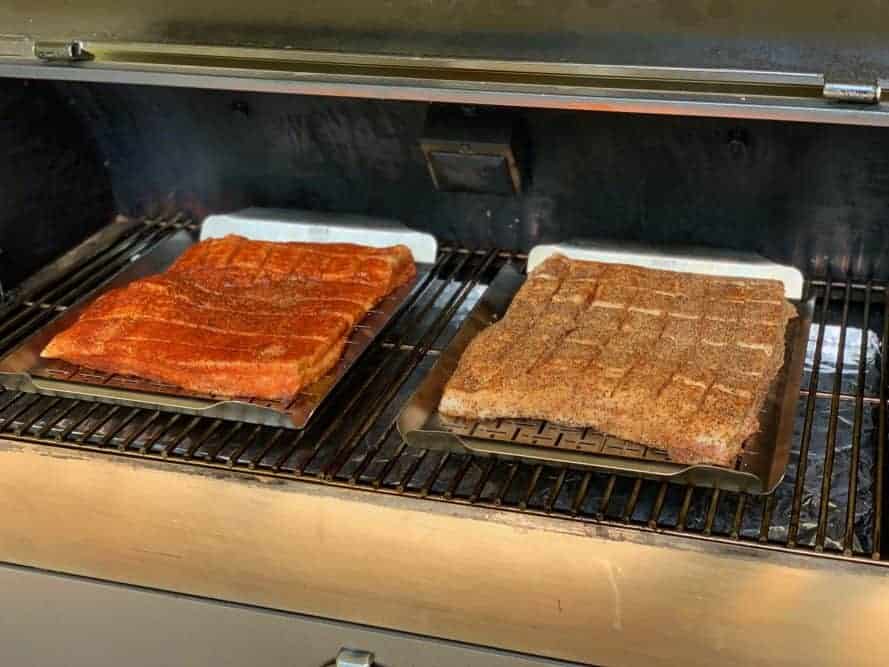
Maintain a smoker temperature of 225°F (107°C) and let the pork belly smoke undisturbed until it reaches about 160°F (71°C) internally and develops a rich mahogany color on the outside.
This usually takes about 4 to 5 hours depending on the thickness of the pork belly and how consistently your smoker holds temperature.
At this stage, the bark should be set, the fat should be starting to render, and the color should be exactly where you want it before moving on to the wrapping stage.
How Long Does It Take to Smoke Pork Belly?
Most whole pork bellies take about 6 hours total when cooked at 225°F (107°C).
The first stage usually takes 4 to 5 hours to reach 160°F (71°C), followed by another 1½ to 2 hours after wrapping.
Every pork belly is a little different, so use temperature and tenderness as your guide rather than relying strictly on the clock.
A good thermometer is one of the most important tools for consistently great barbecue.
Wrap the Pork Belly
Once the pork belly reaches about 160°F (71°C) and the exterior has developed the color you want, it's time to wrap.
You can use aluminum foil, unwaxed butcher paper, or place the pork belly in a foil pan and cover it tightly with foil. I used the foil pan method because it was simple and did a great job of retaining moisture.
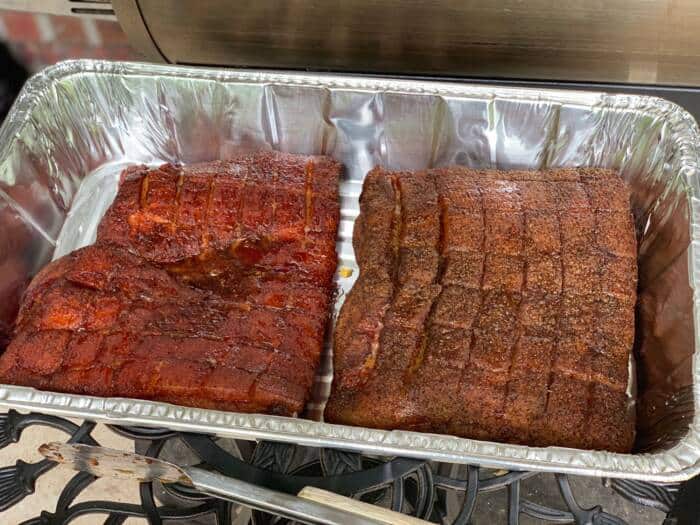
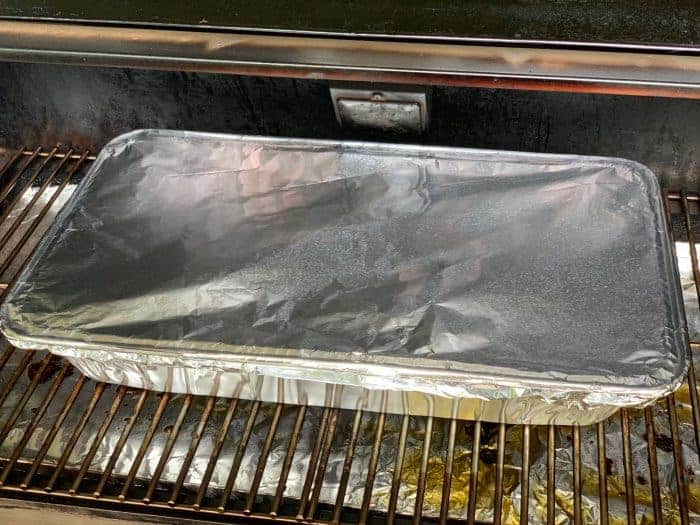
Jeff's Tip: Don't wrap based on time alone. Wait until the bark has the color you want before wrapping. Once it's wrapped, the bark won't darken much more.
Finish and Rest
I usually cook pork belly to about 200°F (93°C), which gives me slices that hold together nicely while still being tender and juicy.
If you prefer a softer texture that pulls apart more easily, you can continue cooking to 205 to 207°F (96 to 97°C).
When the pork belly reaches your desired tenderness, remove it from the smoker and open the foil slightly to release excess heat. Let it rest for at least 15 minutes before slicing.
For the best results, give it 30 to 60 minutes of rest time. The texture improves noticeably as the juices settle back into the meat.
Slice and Serve
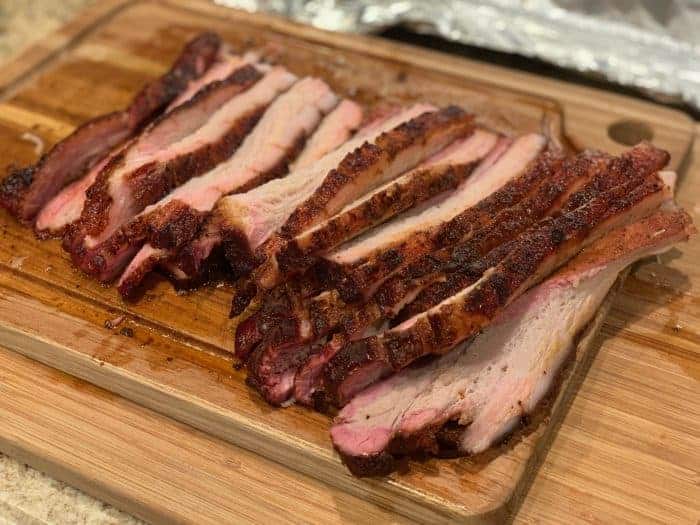
Slice the pork belly across the grain into slices about ¼ inch thick and serve immediately.
Smoked pork belly is rich and flavorful all by itself, but it's also incredible on sandwiches, tacos, sliders, breakfast plates, and even chopped into beans or mac and cheese.
A little goes a long way, which makes it perfect for feeding a crowd.
Common Mistakes When Smoking Pork Belly
Pulling It Too Early
Pork belly is safe to eat long before it's tender. While it reaches a safe temperature at 145°F (63°C), the fat doesn't begin rendering properly until much later. For the best texture, cook it to at least 195°F (90°C).
Skipping the Rest
Resting allows the juices to redistribute and gives the rendered fat time to settle. Even 15 minutes helps, but 30 to 60 minutes is even better.
Using Too Much Strong Smoke
Mesquite and heavy hickory can overpower pork belly. Fruit woods such as cherry and apple usually provide a better balance.
Wrapping Too Soon
Wait until the bark has developed the color you want before wrapping. Once wrapped, bark development slows dramatically.
Jeff's Tip: If you're unsure whether the pork belly is ready, probe it in several spots with your thermometer. It should slide in with very little resistance, similar to room-temperature butter.
Frequently Asked Questions
Can I make burnt ends from this recipe?
Absolutely. Once the pork belly reaches about 200°F (93°C), cut it into cubes, season again if desired, sauce lightly, and return it to the smoker for another 30 to 45 minutes.
Can I smoke pork belly on a pellet grill?
Yes. Pellet grills work exceptionally well for pork belly because they maintain a steady temperature and produce a clean, mild smoke flavor.
Should I cook pork belly fat side up or fat side down?
I recommend cooking it fat side up. As the fat renders, it slowly bastes the meat throughout the cook.
Can I skip the wrap?
Yes, but expect a firmer bark and a longer cooking time. Wrapping helps speed up the cook and keeps the pork belly moist.
Can I slice it or pull it?
Both work great. Cook to about 198 to 200°F (92 to 93°C) for sliceable pork belly or closer to 205 to 207°F (96 to 97°C) if you'd like to pull it.
How long will leftovers keep?
Store leftover pork belly in an airtight container in the refrigerator for up to 4 days or freeze for up to 3 months.
Storage and Reheating
Store leftover smoked pork belly in an airtight container in the refrigerator for up to 4 days.
To reheat, place slices in a covered baking dish with a splash of apple juice or chicken broth and warm in a 300°F (149°C) oven until heated through.
You can also reheat slices in a skillet over medium heat until warmed and lightly crisp around the edges.
Leftover pork belly is outstanding on sandwiches, breakfast plates, tacos, ramen, macaroni and cheese, or even chopped into baked beans.
Final Thoughts
Smoked pork belly is one of those recipes that surprises people the first time they try it. The rich layers of meat and rendered fat create an incredible texture that's somewhere between barbecue and bacon, making it one of my favorite things to cook on the smoker.
Whether you slice it thick for dinner, cube it into burnt ends, or save the leftovers for breakfast the next morning, I think you'll find yourself making this recipe again and again.
If you give it a try, leave a comment below and let me know how it turned out. I'd also love to hear which rub you used and what smoking wood you chose.
Happy Smoking!
Jeff Phillips
Smoked Pork Belly Recipe
Ingredients
- 1 whole pork belly (9 to 13 pounds, skin removed)
- ¼ cup Jeff's Barbecue Sauce (or yellow mustard as a binder)
- ½ cup Jeff's Original Rub
- ½ cup Jeff's Texas Style Rub (optional)
Instructions
- Preheat the smoker to 225°F (107°C).
- Remove the skin if necessary and score the fat cap in a crosshatch pattern about ¼ inch deep.
- Apply a light coating of barbecue sauce or mustard and season generously with your favorite barbecue rub.
- Repeat the seasoning process on the meat side.
- Place the pork belly fat side up on the smoker and cook until it reaches about 160°F (71°C) and develops a rich mahogany color.
- Wrap tightly in foil, butcher paper, or a foil pan covered with foil.
- Continue cooking until the internal temperature reaches 195 to 200°F (90 to 93°C) and the probe slides in with very little resistance.
- Rest for at least 15 minutes before slicing and serving.
Notes
More Pork Recipes You'll Love
Smoked Pork Tenderloin Recipe
Smoked Pork Loin- Tender, Juicy, Flavorful
Smoked Pork Chops – Extra Thick
Smoked Pork Steaks
Hot and Fast Smoked Pork Butt (Ready in About 5 Hours)
Don’t Lose This Recipe
Enter your email and I’ll send a link to this recipe straight to your inbox so you can find it anytime.
Join the Smoking Meat Community
Got a question about this cook or want to share your results?
Join the conversation with other backyard pitmasters.

Came out great! No wrap and used brown sugar as a binder, and
hot honey hog for the rub. 195 and rested for an hour
I used this recipe, but when it came time to wrap, I did at 190 with apple juice( enough to cover bottom of pan) and butter(3 tablespoons) and touched it up with a bit of seasoning. Turned out wonderful. Highly recommend
Can I put it under the broiler for a few minutes to crisp it up? Wondering if this will work?
Made this recipe and it was pretty tasty! Wish I had cut a little more of the fat cap off as I think that might have helped.
Excellent recipe!
Have done pork belly both ways and the burnt end pork belly. (That is awesome if no one has tried them ! ) preference is adding some salt with original rub. Disappears like candy while waiting on the butt to finish. Thanks for all the recipes. Am still a rookie but they take the worry out of doing any of them. So much to try !! Thanks
Hey Jeff,I have made your pork belly and all my wife said was “DAMN!”. I wasn’t a fan of pork bellies but you convinced me differently. Thank you so much for opening my taste buds.
Jeff, I purchased your rub recipe sometime ago and I have sent numerous request to find out why I’m still getting ads with the articles. This is very frustrating and makes me not want to even look at the site anymore. Please help get rid of the ads or stop promoting that with the purchase of the recipe it will be ad free.
Thank you
Don, I just went and looked at your account and I am showing that you should be getting the emails without ads. Can you please forward an email with ads to me at [email protected] so I can look into it and figure out why yours contain ads? Thanks for your help with this!
Jeff, how about a Bacon recipe???
Jeff, Pork belly worked out well. Excellent flavor! I went with a heavy covering on each side with Texas Rub. Smoked a couple hour with apple and then finished just low and slow. Pepper was just about right. But next time I am going to sprinkle with kosher salt like dry brining first, then pour on the Texas Rub. Needed more salt. But a slice in a Bloody Mary is sure tasting good tonight!
Jeff, thanks for all you share, love your rubs, I’ve been using them for 1.5 yrs and still my go to. That said, I’d like your input if you wouldn’t mind. I’m going to smoke/mix a belly with a shoulder for a new experience all together. I’ve not done a belly for the purpose of pulling so my question: how much fat do you leave on the belly before smoke,100%? and again, how much of the rendered fat stays in the mix when pulling/shredding, 100%?.
Thank you for your thoughts, much appreciate!
Jeff ! Your website makes me drool lol .Will be ordering the rubs and cookbook soon.Seems like you have smoked just about everything.Smoking some fresh caught King salmon as we text.I really appreciate your commitment to this as you are a purist no gas grills for you! Thanks Chris