


How to Spatchcock Chicken for Smoking
Smoking-Meat.com is supported by its readers. We may earn an affiliate commission at no extra cost to you if you buy through a link on this page.
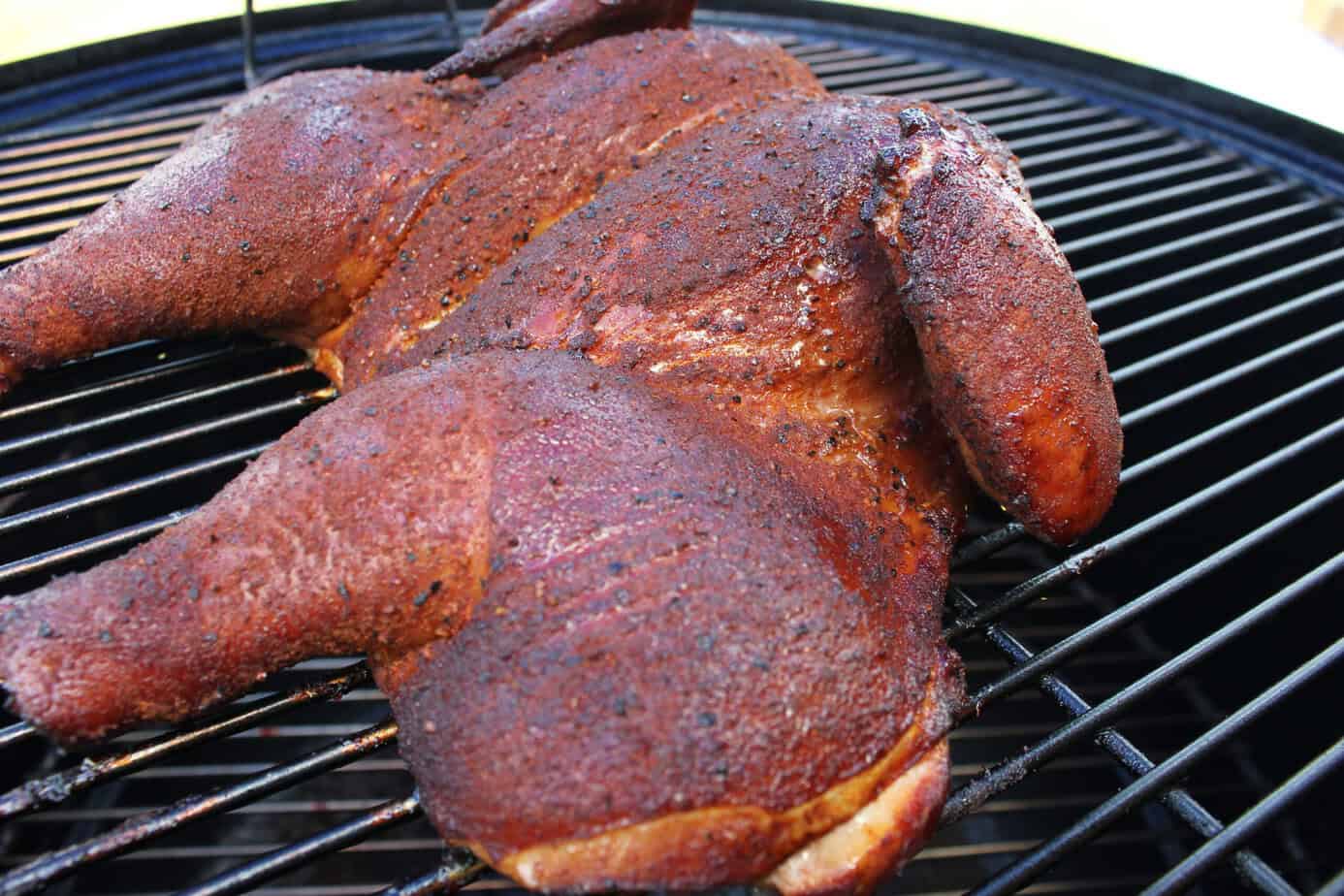
If you have never spatchcocked a chicken before, do not let the name intimidate you. The process is surprisingly simple and, once you try it, there is a good chance it will become your favorite way to smoke whole chickens.
Spatchcocking simply means removing the backbone and flattening the bird so it lays open on the grate. By spreading the chicken out into a more even shape, the breast and thigh meat cook more uniformly, the skin is exposed to more direct heat, and the overall cook time is usually reduced.
If my recipes and barbecue guides have helped you over the years, becoming a member is one of the best ways to support my family's business. As a thank you, you'll enjoy every recipe and article completely ad free for less than $2 a month.
Ad free • Instant access • Cancel anytime
In my experience, spatchcocking is one of the easiest ways to improve the quality of smoked chicken, especially if you struggle with dry breast meat or uneven cooking from one part of the bird to another.
If you are trying to decide whether to cook a whole chicken intact or flatten it first, this guide will show you exactly how to do it and why it works so well.
What Does Spatchcock Mean?
The word “spatchcock” is simply a culinary term that means removing the backbone from a chicken and pressing the bird flat.
Once the backbone is removed, the chicken opens like a book and can be laid skin side up on the cooking grate. This flatter shape allows heat to reach the breast and thighs more evenly, which helps prevent the breast from finishing too early while the legs are still catching up.
The result is a chicken that cooks faster, more evenly, and often with better skin texture.
Why Spatchcocking Works So Well for Smoking
Whole chickens are naturally uneven in shape, with the breasts sitting higher than the thighs and legs. Because of that, some areas are exposed to more heat than others, and the meat does not always finish at the same time.
When you spatchcock the bird, you reduce that height difference and create a much more uniform thickness. This allows the chicken to cook more evenly and often shortens the overall cook time by 20 to 30 percent or so.
The flatter shape also exposes more skin to the heat, which can help improve bite through texture and reduce the chances of ending up with tough, rubbery skin.
Tools You Will Need
You do not need any special equipment, although a good pair of kitchen shears makes the job much easier.
| Tool | Why It Helps |
|---|---|
| Kitchen shears | The easiest way to cut along both sides of the backbone |
| Sharp knife | Helpful for trimming or cutting cartilage if needed |
| Cutting board | Provides a stable work surface |
| Paper towels | Useful for drying the chicken before seasoning |
Kitchen shears are by far the easiest tool for the job, especially if you process whole chickens regularly.
How to Spatchcock a Chicken
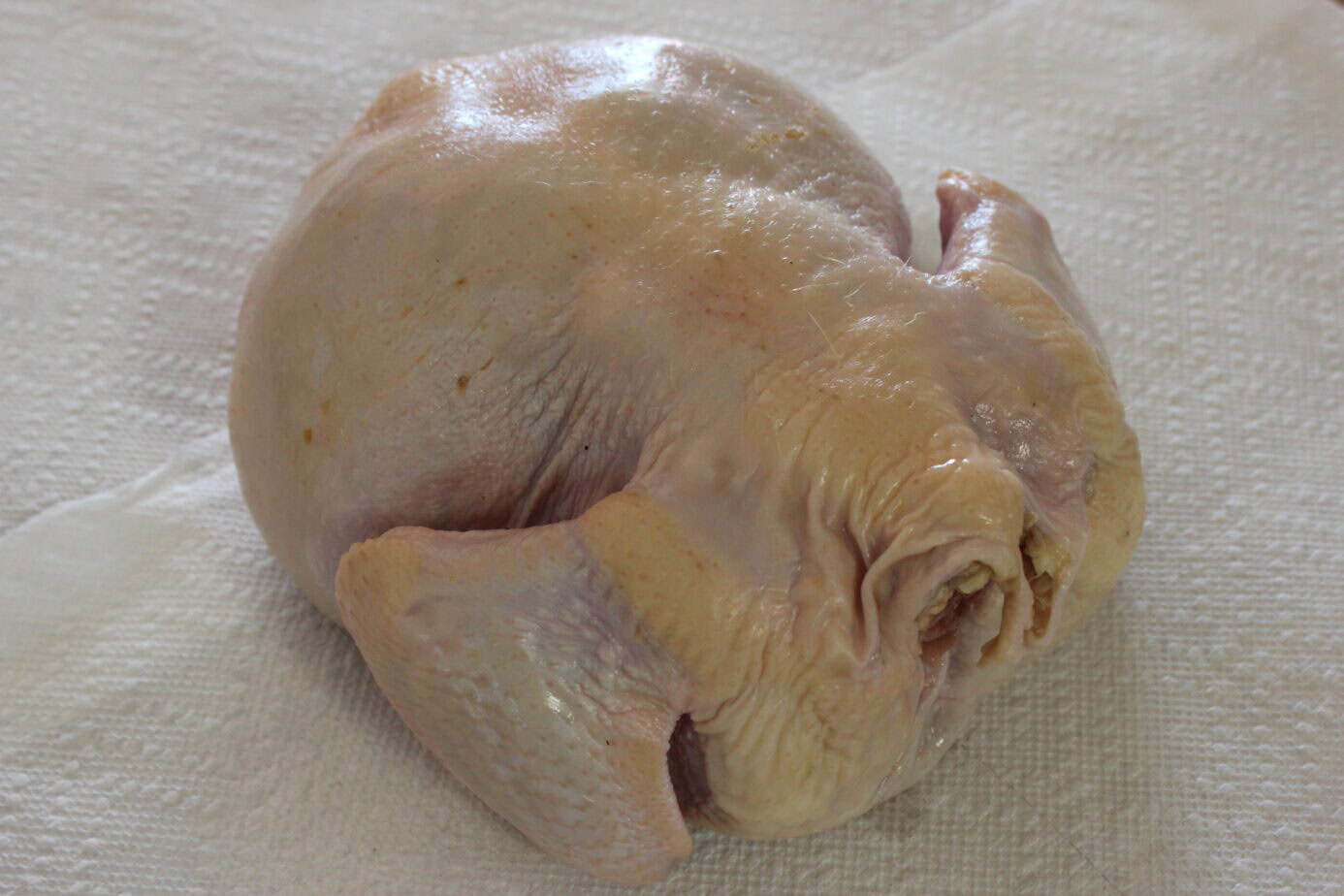
1. Place the Chicken Breast Side Down
Set the chicken on a cutting board with the backbone facing up.
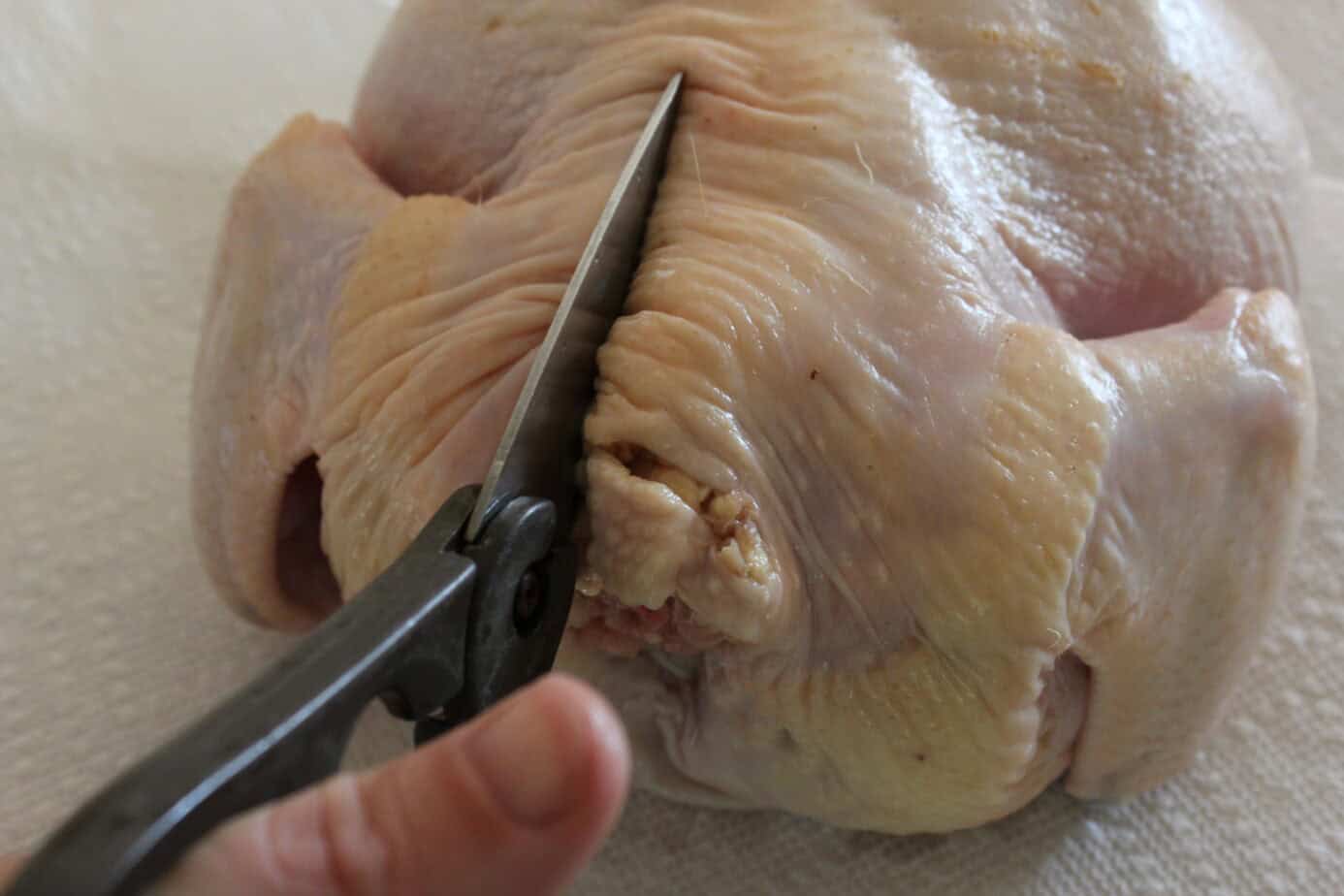
2. Cut Along One Side of the Backbone
Using kitchen shears, cut along one side of the backbone.
3. Cut Along the Other Side
Repeat on the opposite side and remove the backbone completely.
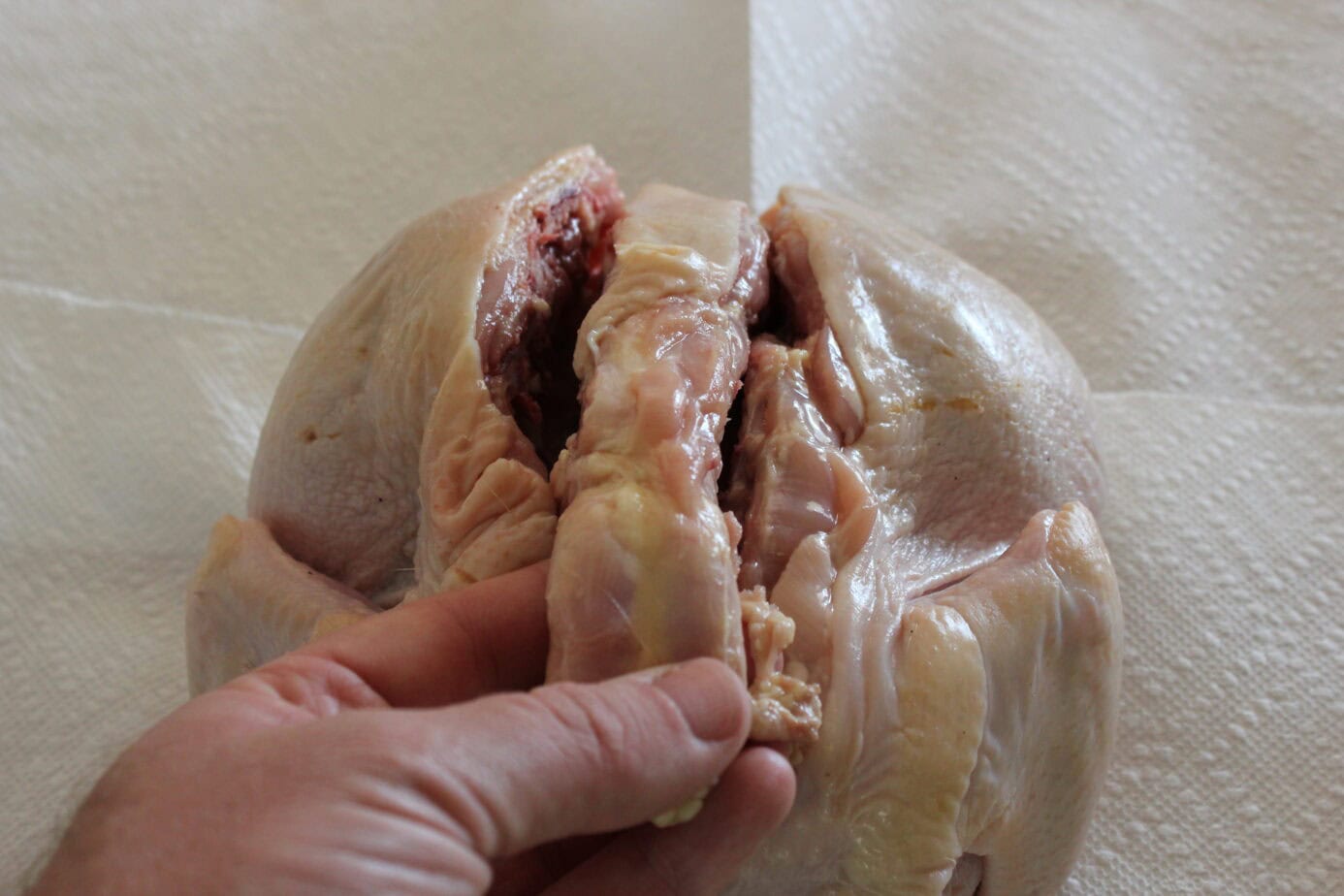
4. Open the Chicken
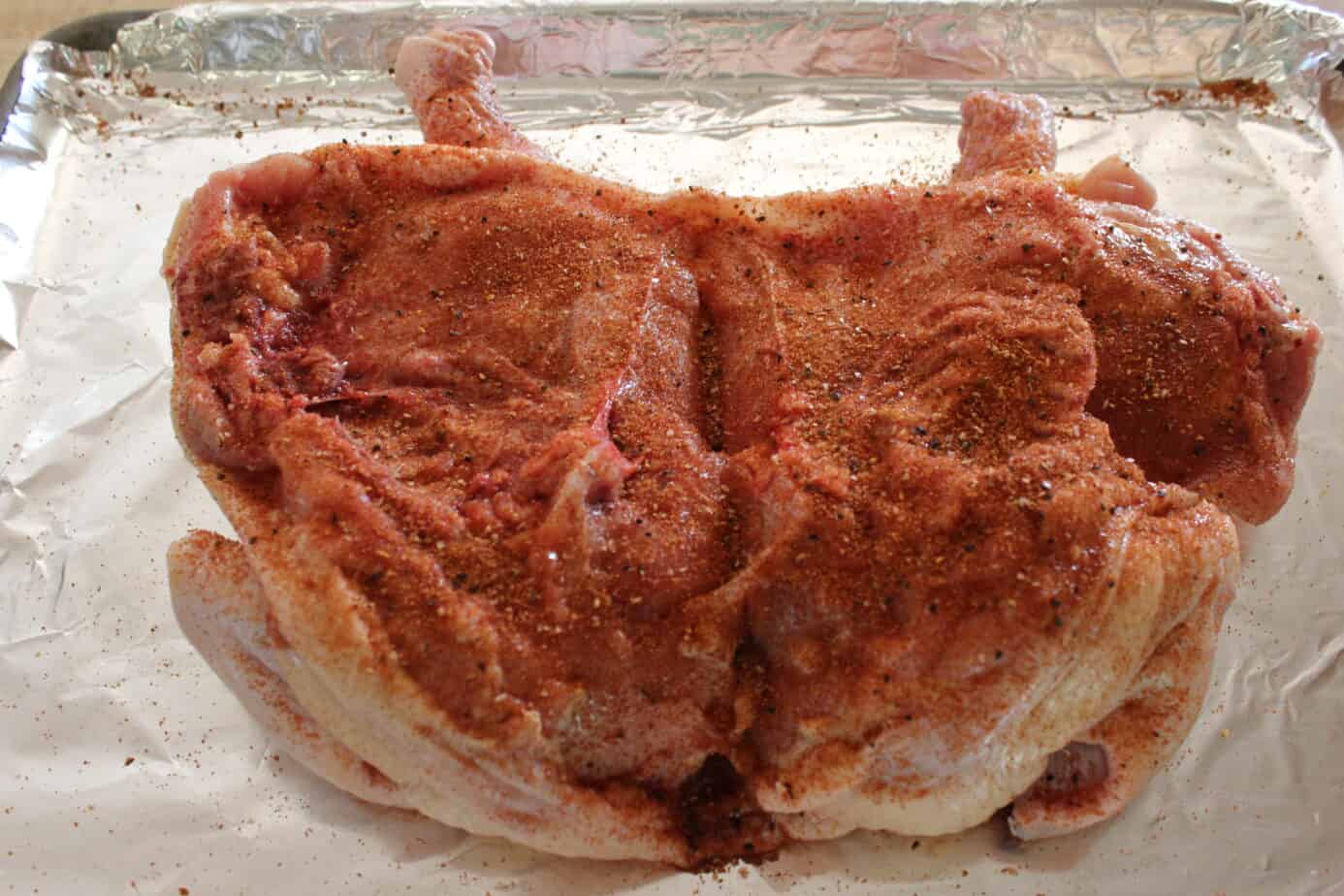
Turn the bird over and spread it open like a book. You can also just press the bird open to reveal the inside if you plan to season the inside of the bird, as I did in the image below.
5. Flatten the Breastbone
Press firmly on the center of the breast until you hear or feel the breastbone crack and the chicken lays flat.
6. Tuck the Wing Tips (Optional)
Fold the wing tips behind the breasts to help prevent them from overcooking.
What to Do With the Backbone
Do not throw the backbone away.
It is excellent for making chicken stock, soup, or gravy and can be frozen until you are ready to use it.
Seasoning and Brining
Once the chicken is flattened, you can brine and season it just as you would any other whole bird.
If you would like to improve moisture retention, see my guide on how to brine chicken for smoking.
Smoking a Spatchcock Chicken
Because the chicken is flatter and more evenly shaped, it cooks more predictably than a traditional whole bird.
A common approach is to start at 225°F (107°C) for 45 to 60 minutes to build smoke flavor, then raise the heat to 300 to 325°F (149 to 163°C) to finish and tighten the skin.
For a detailed explanation of why this works so well, see my article on the best temperature for smoking chicken.
Cook until the breast and thighs reach your preferred internal temperatures.
Why I Like Spatchcocking
Spatchcocking solves several common problems all at once.
The chicken cooks more evenly, the breast meat stays juicier, the skin has a better chance of tightening up, and the overall cook usually finishes sooner.
For many backyard cooks, that combination makes it one of the best ways to prepare a whole chicken for the smoker.
Frequently Asked Questions
Is spatchcocking better than smoking a whole chicken intact?
In many cases, yes. The flatter shape promotes more even cooking and often shortens cook time while improving skin texture.
How much faster does a spatchcock chicken cook?
Cook time is often reduced by roughly 20 to 30 percent or so, depending on the size of the bird and your cooking temperature.
Do I have to brine a spatchcock chicken?
No, but brining can improve moisture retention and seasoning throughout the meat.
Can I use the same method for turkey?
Yes. Spatchcocking works exceptionally well for turkey and other poultry.
Don’t Lose This Article
Enter your email and I’ll send a link to this article straight to your inbox so you can read it anytime.

I ALWAYS spatchcock chicken and turkeys, smoked or oven. Cooks more evenly and get great skin at high temps. I can control smoke and temp independently.
And the backbone is added to making stock to freeze or use for gravy. Finally, you can do this over a bed of root veggies and the drippings add great flavor.
Nice job on the tutorial. Now can you repeat it with the frog cut? I have found that I like it better because there is no bone cutting, no waste, but the same flattened bird.
Jeff,
First,Great site–tons of great information. Love it! My “go to” site for smoking info. I ordered your receipts and use them constantly….for everything smoke or BBQ. However, I’m still getting the advertisements. Please help or tell me what I need to donro get past them.
Again, thanks for the site, definitely a keeper.
Cheers,
Jack Laws
Jack, thank you for the kind words! Are you referring to ads in the email version of the newsletter or in the website version? For now, I am only able to remove the ads from the emailed version. We hope to be able to do that for all versions of the newsletter eventually.